

How Many Acupuncture Treatments Will I Need?
Transparency, trust, and clear communication are three (of many) things I prioritize establishing in the relationships I build with my patients. In this blog, I share everything you need to know about the logistical side to starting care and what goes into creating a treatment plan for the most successful outcomes.
By Dr. Lauren Dyer
| DAC, LAC, DIPL. AC - NCCAOM |

Transparency, trust, and clear communication are three (of many) things I prioritize establishing in the relationships I build with my patients.
Making sure they know what to expect before agreeing to a treatment plan is something I take seriously because I want each person I care for to not only feel confident about working together—but be clear about what that entails since Acupuncture works as a progressive process rather than a 1 or 2 visit fix.
In fact, understanding the number/frequency of visits realistically needed for the most successful outcomes is so important that I make it a point to disclose these aspects of care on our website’s FAQ page, in my Informed Consent paperwork, as well as in-person during your Initial Consult.
So if you are a new patient scheduled to meet with me soon, or are thinking about trying Acupuncture eventually, now you can gain even more insight into these logistics here too. I hope you find this explanation useful to consider if Acupuncture would be right for you.
So! Here’s the first thing to keep in mind…
HOW ACUPUNCTURE WORKS: IT’S NO SECRET
In order to answer “How many treatments will I need?” it’s essential to understand the intention of Acupuncture which is: to treat the underlying root causes to symptoms by restoring balance to the body’s organs and nervous system.
It does this by activating their healing responses, regulating the sympathetic stress response, plus mobilizing circulation.
Treating the root cause not only helps to keep your symptoms away, but preventatively strengthens your body so they are less likely to come back altogether or full-force in the future. This is how Acupuncture creates an elevated foundation for your health so you can experience lasting shifts to your physical, mental, and emotional well-being.
That is why, if there is one thing to keep in mind when considering whether you should “try” it or not, it’s this:
Acupuncture works cumulatively.
Cumulatively, as in, your treatments and their effects need to build on one another to become long-lasting shifts to your health.
Just like learning a new skill or working towards any goal, consistency is key.
Since Acupuncture, at it’s core, is changing the way your nervous system communicates with your body (by shifting it from a reactive - stressed - inflamed fight-or-flight state to one that is more inclined to calmly respond - rest - digest - and regulate itself ) treatments that are scheduled at a regular interval and more closely together at the beginning gives the nervous system the reliable messaging it needs to remind your body how to heal itself on its own.
The longer you have had __________(insert diagnosis/symptoms here) the more treatments it will take for this shift to happen.
This aspect of Acupuncture is no secret, it’s universal.
In my professional opinion, any seasoned clinician should explain this on your first visit, so whether you get Acupuncture with me or someone else, the same expectation applies.
CHOOSE YOUR ADVENTURE
When creating a treatment plan, my intention is to help you get effective, lasting relief in the most efficient time frame possible.
To achieve this, it’s not just the number of treatments that matters, but the frequency that you come in to receive them.
Put it this way, would you rather get Acupuncture 2x/week for a month and be able to live your life with a major reduction (and potential resolution) in symptoms?
Or would you rather come in once a week for several months and prolong the relief you want?
I say this because the beginning of your care is the most important phase for accumulating progress.
The longer the time span between your initial visits, the less likely it is that your body will respond well to care, ie. adapt to the messaging Acupuncture is trying to provide it with. I know this from experience…
When I was just starting out in practice, I admit I was too nervous to tell patients what to expect. I wouldn’t ask them to come in to more frequent sessions because I figured they would find it too much of an inconvenience. My early-day efforts to “save” them time and resources by coming in just once a week ended up costing them in more in dissatisfaction because they did not get the results they were hoping for. Let’s just say I learned that lesson quickly! I learned to step into my role as a clinician which meant letting patients know what to expect so that I could confidently guide them through each phase of their healing process—like I do today.
Moral of that story: “Trying” Acupuncture by dabbling in occasional or erratically scheduled visits does not set you up for drastic results.
This is why I rarely ever work with people on a once-a-week basis any more. It’s the slow and drawn-out route where you can feel good for 1-3 days after your first session, but then by the time I see you the following week (5-7 days later) you & your symptoms are right back to square one.
There’s no momentum, just a see-saw of momentary relief reverting back to baseline imbalances.
That scenario ends up being a waste of your time and resources. You don’t want that & neither do I.
Instead, here is the treatment frequency that most Acupuncturists require (including me) to build sustainable progress:
2x/week for 2-3 weeks for chronic but straightforward conditions
2x/week for 3-4 weeks for chronic/complicated conditions
2x/week for 1-2 weeks for an acute issues
The first week is a jump-start. I imagine your internal dialogue being like, “Hmm, is this really worth getting into…let’s see.”
By the second week, most people (with a chronic condition, let’s say) are pleasantly surprised. This is when you’ll be thinking: “Is it just me, or is my ______ not as bad? I guess I’ll keep going.”
The third week, most patients can experience a significant improvement in their symptoms.
These sessions are to make sure your body can hold onto the progress we’ve accumulated before spacing things out.
That is why I encourage you to choose your adventure wisely.
Do you want the condensed/efficient route or the prolonged and potentially frustrating one?
My hope is you pick the former—the one that will set you up for success.
GENERAL GUIDELINES
If you are looking to “try” Acupuncture, as you read, it takes more than 1-2 treatments to start noticing lasting results.
You can notice short-term benefits even after the first or second session (reduced tension - improved sleep - smoother digestion - lighter mood being the most common) but again, in order for those changes to become more significant and long-term, the above frequency is needed.
As for how many treatments you’ll need, in *general* here is what you can anticipate:
For more acute conditions:
it takes about of 4-6 sessions to accumulate lasting progress before receiving treatments on a maintenance basis.
For more chronic and complicated conditions:
at least 8-10 treatments is when most patients start noticing long-term changes before transitioning to a maintenance basis.
For women’s health conditions related to regulating/improving your period:
it takes about 3 months (cycles) of care to effect lasting shifts, however some women still notice significant changes after 1 month.
MAINTENANCE: PASSING THE TORCH
Once the initial accumulation of treatments is done and you are at a place (what I call the “tipping point”) when your symptoms are much better than when you began (and they’re staying) we will start to taper/space treatments out. This marks the start of your maintenance phase.
Maintenance can look like 1x/week for 2-3 weeks then 1x/month, 1x/season, but it’s different for each person.

It’s when the torch is officially passed, putting more of the emphasis on you to “run with” (as I call it) the suggestions I offer to compliment your in-office treatments so your progress stays. By this point in their care, the majority of my patients are able to manage and prevent their symptoms.
FINAL THOUGHTS
As you read, Acupuncture is undeniably a commitment that requires trust in the process—and I don’t take either of those things lightly.
Here at Empower, I emphasize offering at-home care to compliment and expedite your healing process beyond our time together. Acupuncture is a potent blend of physical and energetic medicine but that doesn’t mean it should become a long-term crutch for what’s bothering you. In my opinion, I wouldn’t be doing my job very well if that was the case. My goal is to give you the most effective care in the most efficient time frame.
So if you are eager for personalized, holistic guidance to create a foundation for well-being that goes beyond band-aid symptom support, then I welcome the opportunity to work together.
For an insider view of what it’s like to collaborate, check out these patient testimonials below…
WHAT OUR PATIENTS ARE SAYING
“Seeking acupuncture from Lauren is the best thing I have done for my physical and mental health in over a decade. I was someone who had tried everything - from so many appointments with medical practitioners all the way down to online diets/supplements I had read that would help me. I felt almost at the end of the road. If you’ve ever thought ‘My body is too stubborn/I’m skeptical if it will work for me’ I was that person and I’ve never been so glad to be proven wrong. Lauren quickly diagnosed my issues and set forth a plan of treatments, as well as nutrition guidance and many other resources that helped me so much, that were specifically tailored for what I was struggling with. Within only one treatment my sleep went from being very poor and broken up, to a full 8+ hours. Over the following treatments I felt my body come back to life, and I will forever be SO GLAD that I chose to seek help at Empower...Not only is the treatment itself the most calming and restorative hour you will experience, but the time spent talking to Lauren will leave you feeling full of knowledge to benefit your entire wellbeing. Her studio is an oasis of good energy and I cannot wait to go back for future treatments, just as a treat for myself.”
“I have had depression for many years and I also have had very low energy levels for the last year or so, despite trying different things. I was intrigued by her articles, so I made an acupuncture appointment with her. She has such a gentle presence about her. She wanted to help me find a solution for depression and low energy. During my first visit, Lauren did some research while I was getting my treatment. I was so grateful that she took the time to look deeper into a solution other than just the acupuncture. I followed her recommendations and after just the first visit I was already seeing a change. After ~7 treatments, my digestion was regulated, I was feeling great and had more energy than before. I am looking forward to seeing Dr. Lauren when my life gets a little more hectic to help with managing the stress.”
“I saw Dr Lauren Dyer for 11 total visits. She was thorough, informative, caring, personable, and dedicated to her work. I felt safe in her care. She was always warm and friendly and a good listener. She successfully helped me to move some energy in my body to bring me to a greater level of well-being. I highly recommend her for any need of acupuncture service.”
“Recently I have had sessions of acupuncture with Lauren, and it was beyond helpful. I originally went to see her for help with my anxiety and the initial consult took us further into a number of issues I had been having. After just two sessions so much had improved. It was like a fog had been lifted. And one of the biggest difference was she has started to treat my allergies and despite being in peak Pollen season; I DIDNT NEED TO TAKE ANY ALLERGY MEDICINE! Usually I would take take about 4 a day during this time. I went in for one thing and Lauren guided me through a treatment cycle that helped improve my daily life noticeably on many levels. ”
“I was recommended by a friend of mine to try acupuncture as I had been struggling with various complex stomach issues. I was not expecting such drastic and lasting results as I had been struggling with these issues for years. Lauren took the time to talk through my medical history not just from a scientific and medical approach, but how stress and emotional instability could be contributing to my overall issues. Her feedback, insight, and overall tone made me feel like she was assessing my issues from a comprehensive and connected approach rather than treating individual symptoms. The sessions to follow were not only physically helping my body, they were mentally therapeutic. I found myself so relaxed that I often fell asleep during the session. The results were (and are) lasting. I did 5-sessions and it was worth every penny. I will continue to go back every month or so for maintenance, but I know I have found my lifetime acupuncturist!”
“I cannot say enough about my 10 sessions with Dr. Lauren Dyer. Aside from genuinely looking forward to seeing her each week for her warm and compassionate energy, this woman knows her stuff! She listens intently for signs of imbalance so she can provide information and suggestions for an individual care plan. I came to Dr. Dyer on my path to healing after years of chronic stress, unprocessed trauma, and feelings of being disconnected/out of sync with my body’s processes. I was welcomed with so much care, felt safe and comfortable enough to share my past experiences that were manifesting as high anxiety, pelvic pain, and restlessness, and began seeing relief in sessions almost immediately. I fell asleep for the majority of my sessions and began to feel replenished and at peace. After 10 sessions Dr. Dyer helped to switch off my fight or flight survival mode from past trauma, identify where I was leaking energy, and suggested additional tools/resources outside of sessions that have now become habits for ongoing wellness. I did not know this feeling of peace was possible and am so grateful for Dr Dyer’s expertise and guidance to help me get back into my body. I cannot imagine seeing anyone else!”

The 5 Spirits: Supporting The Soul in Chinese Medicine
The Spirit in TCM is made up of five “spirit-minds” that are stored in each of the five Yin organs. You can think of them like facets to your personality: they each have unique roles and characteristics that assert themselves when content or afflicted. Discover how the Five Spirits influence your health and ability to pursue your potential.

WRITTEN BY ACUPUCTURISTS: LAUREN DYER & HANNAH GUYON
WHAT’S IN A SPIRIT
Along with Qi (energy), Blood, and Essence (like genetics), our Spirit or Shen is considered a vital substance in Traditional Chinese Medicine (TCM) as it completes the fabric of our physiological makeup and human life. Rather than being linked to religion or used to convey how “spiritual” a person is (or isn’t), in this medicine, Spirit takes on a secular meaning.
Fundamentally, Spirit is the unique animation humans possess which allows a person to: express their authenticity, dedicate themselves to a hobby or vocation, feel connected to mundane everyday wonders, and to be the conscious co-creator of their destiny. It is that intangible yet empirical inner spark that activates our imagination, ambition, intention, and awe.
Together with our psyche and body, Spirit is what orients us within our reality and experience of the world around us. Its health and vibrancy is essential for developing relationships as well as the virtues unique to the human condition (compassion, accountability, wisdom, morality, courage, etc.)
Put simply, Spirit determines how we show up in the world, connect with others, and navigate all the experiences that life has to offer.
A unique feature of Acupuncture and TCM is how discussions of health integrate how one’s physical, mental-emotional, and spiritual health mirror one another. Just like how each of the body’s organ systems has its own Acupuncture meridian (the Lung channel, The Large Intestine channel, for example) there are associations between the organs and specific emotions, as well as the organs and the spirit.
These connections reveal how, in TCM, energy is considered on a spectrum from the material to the ethereal.
On the Material end you have the most tangible and visible of substances: the body, blood, fluids etc would land here. Towards the middle of the spectrum is energy whose presence is apparent in how the body functions even if it cannot be measured or fully grasped, aka Qi. A person’s Qi can be sensed in their pulse or heartbeat and heard in the voice. Can you think of a time that you walked into a room full of people and could tell whether the energy was tense or cheerful? That’s Qi - which also makes itself known through emotional states.
On the far end of this spectrum, you get Spirit.
The Spirit is the most ethereal expression of energy and an extension of an organ’s Qi-aspect. It can be seen in something as simple as whether someone’s eyes sparkle or light up when they talk to you about something they’re passionate about, versus if they have a dull gaze, and perhaps appear depressed.
You still with us? Good, because deeper down the rabbit hole we go...
THE FIVE “FACETS”
If you have thought of your spirit or soul as being stored in your heart, that’s actually not far off! In TCM, there are five types of “spirit-minds” that branch-off from someone’s central Spirit. Each is stored within one of the 5 Yin organs:
The Heart beholds The Shen
The Lungs contain The Po
The Liver commands The Hun
The Spleen grounds The Yi
The Kidneys are keepers of The Zhi
Each embodies your capacity to show up in the world as the best version of yourself. You can think of them like five facets to your personality: they each have unique roles and characteristics that assert themselves when content or disturbed.
When we sit and listen to our patients, we tune into the presence of these characteristics too. Assessing the state of their Spirit is always included in our observation & diagnostic process since the spirit is vital to one’s overall well-being.
Usually when we see spirit disharmonies they are paired with physical symptoms. Other times they aren’t, but patients will share behaviors - deep seated emotions - and mental tendencies they know are holding them back from the things they want in life—or the way they want to feel. This is because when one spirit is affected it can impact the others, leading you to feel “off,” “stuck,” “lost,” or not yourself anymore. Sometimes it can even feel as if you are not in your body.
Our guess is that you’ll likely be able to relate to at least one or some of the following spirit-mind tendencies. However as you read along, please keep in mind: the expressions of these spirit-minds is a dynamic dance within us. Like our bodies and state of health, they are not stuck in a state of imbalance unless something changes—and sometimes that change starts within...
Here’s what we will be sharing :
What each spirit is + its paired organ
Each spirit’s responsibilities
Qualities of that spirit when it is tethered and balanced
Shadow tendencies that manifest when the spirit is disconnected and imbalanced
So, here they are…
THE FIVE SPIRITS
THE SHEN ~ THE MIND
The Shen is the spirit of “The Mind” and represents our consciousness. It is the basis for our humanity and source from which all other spirits emerge from. The Shen is in charge of our identity and capacity for self-awareness, but also, how we view and interact with others: how we orient ourselves in the world around us. The Shen is essential for integrating our psychic and emotional life since it governs perception, insight, ideas, the ability to extend beyond the Self (form relationships), determine our values, morality, and wisdom. The Mind is what bridges our intuition and inspiration: it allows one to recognize their truth and callings so they can show up in the world as their most authentic self.
In the body, the Shen is ruled by the Heart which, in Chinese Medicine, is the “the origin of mental life,” and therefore the “monarch” of all other organs: the only one capable of recognizing, assessing, and truly feeling the spectrum of one’s emotional experiences. Although different emotions (anger, joy, sadness, fear, guilt, etc.) will affect the body’s organs in unique ways, those organs do not “feel” the emotion and, instead, reflect the impact of that emotion as perceived by the Heart in the form of physical symptoms. In that sense, the Shen is referred to as the Heart-Mind, giving the old adage the heart has a mind of its own, a ring of truth.
Given the Shen’s role in processing interactions with others and external stimuli, all senses (eyesight, hearing, smell, taste, touch) depend on it for meaning just like how the brain is relied on in Western Medicine.
For this reason, the Shen is said to be the “most visible” of all the spirits, evident in how one carries themselves both in public and in conversation: the sparkle (or dullness) in one’s eyes, the capacity to maintain eye contact, as well as the use of clear/logical speech (since the Heart is the root of the tongue in TCM). It is the Shen that calculates appropriate behavior in order to “click” with others and foster mutual understanding: a Heart (Shen) to Heart (Shen).
When the Shen is vibrant, there is:
Clear thinking & consciousness, sharp insight, good intellect, self-awareness, a strong sense-of self, sound sleep (since the Shen retreats back into the Heart to be housed at night), a balanced emotional reality, good judgement expressed through wise action, flowing ideas, inspiration, alertness in the eyes, eye contact during conversation, clear speech + confident self-expression, compassion, and empathy.
When the Shen is disturbed and the Heart is affected, a person will have:
Cloudy consciousness, poor insight, inappropriate/erratic behavior or speech tendencies, socially awkward interactions, low self-esteem, difficulty expressing one’s self, hypervigilance and paranoia, poor self-awareness, a hard time relating to others (including little-to-no eye contact in conversation), little capacity for compassion/empathy, irrational thoughts and phobias, an imbalanced emotional reality (fixated on one emotion), panic, disturbed sleep etc.
THE PO ~ THE CORPOREAL OR ANIMAL SOUL
The po is the spirit-mind stored by the Lungs. It integrates with us at our first breath, and disintegrates at the end of life when breathing ceases.
When you think of the Po, consider your moment-to-moment experiences - your instincts, impulses, and knee-jerk reactions.
When balanced, the Po supports our ability to stay connected to the present moment through our breath. When strong, it is associated with assertiveness and fairness. We would expect someone with a well balanced Po to speak with a clear strong voice, to breathe well, and to act with the virtue of justice.
When there is weakness of the Po, we might see lingering or unresolved grief, lifeless voice, lethargy, depression, or constant feelings of loss or incompleteness. In this case, a person might be stuck in a moment that is far in the past, keeping them from being present or moving forward. We might also notice the presence of chronic respiratory issues like frequent colds, long standing cough, or asthma associated with this aura of sorrow.
When the Po is supported and reintegrated with the present moment, we see the ability to process grief in a healthy way. Impulsive reactivity is exchanged for responsiveness and trustworthy instincts. We see the shroud of sadness and heaviness lift, giving way to the ability to appreciate the beauty and fullness of the present moment, to experience awe and wonderment, and to grasp a flash of inspiration.
THE YI ~ THOUGHT
The Yi is the spirit-mind stored by the Spleen. It has to do with thought, intellect, and comprehension, as well as intention and creativity.
The Spleen organ in TCM is a major organ of digestion, separating and transforming useful nutrients from waste products. On a physical level, a weak Spleen can result in poor digestion of food. On a spirit level, a weak Spleen, and a weak Yi as a result, can cause poor digestion of thoughts. This means there may be trouble effectively deliberating, and instead a person may find themselves overthinking or ruminating on their worries. They may lack clear intention, and therefore they may feel “foggy brained,” or bored and unmotivated.
There is a saying, “the Yi guides the Li which guides the Qi” - meaning your intention guides the ritual which guides your energy. Have you ever noticed the difference between having a vague desire to achieve a broad goal such as “get in shape one day” or “learn a new language” doesn’t tend to pan out unless you set up a structure (or ritual) for yourself? My mother gave me the sage advice that “a dream without tangible goals is just a wish.” Having a strong and clear intention (Yi) helps us to create smart, structured plans and goals, which takes our energy there (aka manifests that reality!).
A strong Yi also promotes the virtues of faithfulness and loyalty. If the Yi is suffering, these virtues can become skewed to the point of “‘stifling’ loyalty, exaggerated sympathy, and even self-destructive generosity” (Kaptchuk, 60).
Supporting the spleen and its spirit-mind the Yi, can help you to cultivate clear intention, insight, creativity, motivation, and appropriate faithfulness (to your goals and to other people).
THE HUN ~ THE ETHEREAL SOUL
Of all the spirits in Chinese Medicine, the Hun or Ethereal Soul broadly shares the most similarities with the Western concept of the soul: it is tethered at birth, has a will of its own, yet at death it survives the body, preserving its physical appearance to wander the earth, the spirit realm, or return to the source of all life. This wandering quality is essential to understanding the Hun’s purpose and nature.
To start, the Hun is its own level of consciousness whose vitality depends on its ability to connect and disengage with the Mind—to “come and go” as it pleases. Whereas the Mind is more rational and in charge of processing/integrating information perceived from the external world, the Ethereal Soul is in charge of bringing one’s inner world and dreams into awareness and fruition. It alerts the Shen to our intuition, ideas, life goals, creativity, and artistic inspiration so they can be pursued rather than merely reflected on. Inherently Yang in nature, the Ethereal Soul provides the psyche with movement in several ways:
out-of-body during sleep and dreaming
beyond one’s everyday life/circumstances through the pursuit of life goals
through the planning of projects and paths needed to accomplish them
beyond the self towards others in fostering/maintaining relationships
Knowing the Hun requires movement to engage and detach from the Mind, it is no coincidence that it resides in the Liver: the organ responsible for ensuring smooth circulation throughout the body. Physically, the free flow of Liver Qi and Blood is the medium by which the Ethereal Soul “comes and goes.” In TCM, the Liver acts as the chief delegator to the monarch (The Heart). In that sense, the healthy personality of the Liver—and balanced animation of the Ethereal Soul—can be seen in those who excel at self-leadership, management, structure, and routine.
When the Liver is healthy, the Liver Blood is abundant, and circulation of Liver Qi is smooth, the Hun is content—it can come and go freely: there will be a healthy flow of ideas and creativity for the Mind to receive and integrate. A person will be connected to their intuition, able to envision a goal, and feel like they have a direction for their life. They can plan the steps necessary to actualize their dreams. In essence, a rooted Hun provides the courage to pursue one’s potential and regulate emotional ups/downs. With a balanced Hun, roadblocks can be faced with flexibility and frustrations met with resolve.
When the Hun’s movement becomes stifled due to a weakened Liver (such as Liver Qi stagnation or a Liver Blood/Yin deficiency) the Mind will lack stimulation, making a person apathetic and depressed. They will feel a lack of direction or purpose. They can lose touch with their emotions or internalize to the point of endlessly stewing causing resentment. Because of the Liver’s connection to the eyes and physic “sight,” there can be a lack of vision for life-dreams, dream-disturbed sleep, and a disconnection from one’s intuition. This can cause discouragement and a lack of desire to move beyond one’s “stuckness” and circumstances in life. If the Mind is overly-controlling or not receptive to the Ethereal Soul’s input/desires, they might be fully aware of what changes they need to make to pursue their potential, but unable to “get the ball rolling” in the direction they seek.
If the Liver is overburdened due to an excess pathogen (usually Liver-Heat Rising or Liver-Fire) the Hun will travel excessively and inundate the Mind. For example, someone can be full of ideas and inspiration, but because the Hun is so flighty, a person will not be able to bring them to fruition. With this kind of Hun-disturbance, there will be agitation, anger, rage, an inability to regulate one’s emotional overwhelm, and manic tendencies.
Overall, a disembodied Hun is implicated in involuntary dissociation (such as in PTSD), conscious escapism (excessive daydreaming, procrastination, substance use, etc.) and nightmares.
THE ZHI ~ THE WILL
The Zhi is our willpower. This spirit-mind is stored in the Kidneys, which, in TCM, are associated with our deepest “essence,” our inherited traits, our reproductive potential, and our deepest stores of energy. The Kidneys are said to house the “life gate fire” which is yang in nature, yet they are also associated with the water element which is yin. This duality is mirrored in how there is a yin and yang aspect to the Zhi.
The emotion of the Kidneys is fear, while the virtue of their spirit-mind is wisdom. When you look back on your life - do you recall experiences where fear of the unknown transformed into experience-based wisdom? It’s something that develops over a lifetime. The Yin Will is related to our destiny or fate - our relationship with and journey into the unknown of the future - it involves trust and faith. The Yang Will is more immediate than that - it has to do with the conscious efforts and fundamental decisions that allow your will for certain desires and outcomes to come to fruition.
An imbalance between the Zhi may look like restlessness, a desire to run away from your life, a vague or existential fear; patients might share a desire for things to be different than where they are regarding their life cycle, like a fear of aging, for example. When the Kidney Qi is weakened, there can be a lack of willpower and drive which is an important aspect of chronic depression. On the other hand, the Zhi can also become destructive, resulting in recklessness and excessive risk-taking. These symptoms can coincide with premature aging (looking older than you are), low back/knee pain, bladder issues, burnout, chronic exhaustion, recurrent or lingering illness, ear ringing, thyroid imbalances, memory loss, edema.
Have you ever wanted something, set out on the path to complete it, and come to find that after enough time, conviction in your ability to achieve it, and consistent effort—you have it? A job (or career change)...a degree...to become skillful at a hobby...to birth a passion project?
You can think of the Will like The Wizard of Oz...it works tirelessly behind the curtain—the scenes of your conscious awareness—until you reach your destination. Once you arrive, it comes out to greet and congratulate you on the journey as if to say: “Well, look who it is...you did it! I knew you could make it here. Welcome to (your “dream” aka manifested reality), you are right on time.”
In that sense, the Yang Will gives you the perseverance to set out on the journey whereas the Yin Zhi is that part of you that becomes apparent once the goal is reached. A healthy Zhi invites us to faithfully wade into the unknown, take the reins of destiny, and realize you’ve had the power to be the co-creator of your life all along. It’s like that saying, choose your hard. Healing and embarking on the journey to change your life is hard. Yet, staying in the same place and living with regret is hard. The Zhi asks:
What will it be…will you stay or will you go?
YOUR SPIRITS AWAIT…
Oftentimes people think of seeking out Acupuncture for a physical ailment or, just as commonly, to support their mental health in cases of anxiety, depression, and trauma-recovery. However treating the spirit can be just as helpful to encourage someone’s healing.
In many cases, it’s actually the key.
As you just read, cultivating clear and intact spirit-minds helps us to adopt and express the virtues of wisdom, justice, loyalty/faithfulness, propriety, and human kindness, rather than be consumed by fear, anger, reactivity/impulsiveness, complacency/boredom, or disconnectedness. They allow us to have authority over our thoughts, actions, and life path. Together, they guide us to hone our individuality but also foster connections that make life meaningful.
While offering acupuncture, we are intentionally selecting points that, yes, mobilize your body’s natural healing process—but also points that nourish these spirits to tether them to their associated organ systems so you feel more grounded, clear, safe, and fully integrated in your body. That is how Acupuncture, as a blend of physical and energy medicine, clears the blockages while creating the space for you to fully inhabit and express most vibrant and authentic self. If that is something you seek for yourself, we would be grateful to support you.
Your spirits await…
BEHIND THE BLOG
Hannah Guyon a Licensed Acupuncturist who has owned and operated her own private practice Thrive Acupuncture + Herbal Medicine for three years. Hannah specializes in working with patients for: Women’s Health, Mental/Emotional health, and Internal Medicine (via her National Board Certification in Chinese Herbal Medicine). In her spare time, she enjoys hiking, yoga, and reading. To learn more about Hannah and her approach to care, check out her practice through: ThriveAcuHerbal.com
Lauren Dyer is the co-owner and Licensed Acupuncturist at Empower Chiropractic & Acupuncture in New Gloucester, Maine. She has been in private practice for three years and specializes in providing Acupuncture + TCM therapies for Mental/Emotional Health and Pain Management. For her, the ways a person’s psychology and physiology become reflected in their health is an ongoing area of focus in her care. To learn more about Lauren and her offerings, you can check out more blog articles and connect with her right here at Empowerchiroacu.com
SOURCES:
Kaptchuk, Ted (2008). The Web That Has No Weaver: Understanding Chinese Medicine. New York: McGraw-Hill.
Maciocia, Giovanni (2009). The Psyche in Chinese Medicine: Treatment of Emotional and Mental Disharmonies with Acupuncture and Chinese Herbs. Edinburgh: Churchill Livingstone.

What Does Your Tongue Say About Your Health?
Believe me, I get it. “Go ahead and stick out your tongue” is not something you’re used to being asked at the doctors. But in Chinese Medicine, Tongue Diagnosis is an essential part of our evaluation. It’s like a road map and mirror of what’s taking place inside the body. Read on to see what your tongue says about your health!

BY Dr. Lauren Dyer (DAC, LAC, MSA)
TONGUE DIAGNOSIS IN
CHINESE MEDICINE
If you have ever had Acupuncture or are thinking about setting up an appointment, get ready to be asked what might seem like a strange request:
“Go ahead and stick out your tongue.”
If your eyebrow is raised in confusion, I get it.
I mean, what medical professionals ever ask to look at your tongue? Not many.
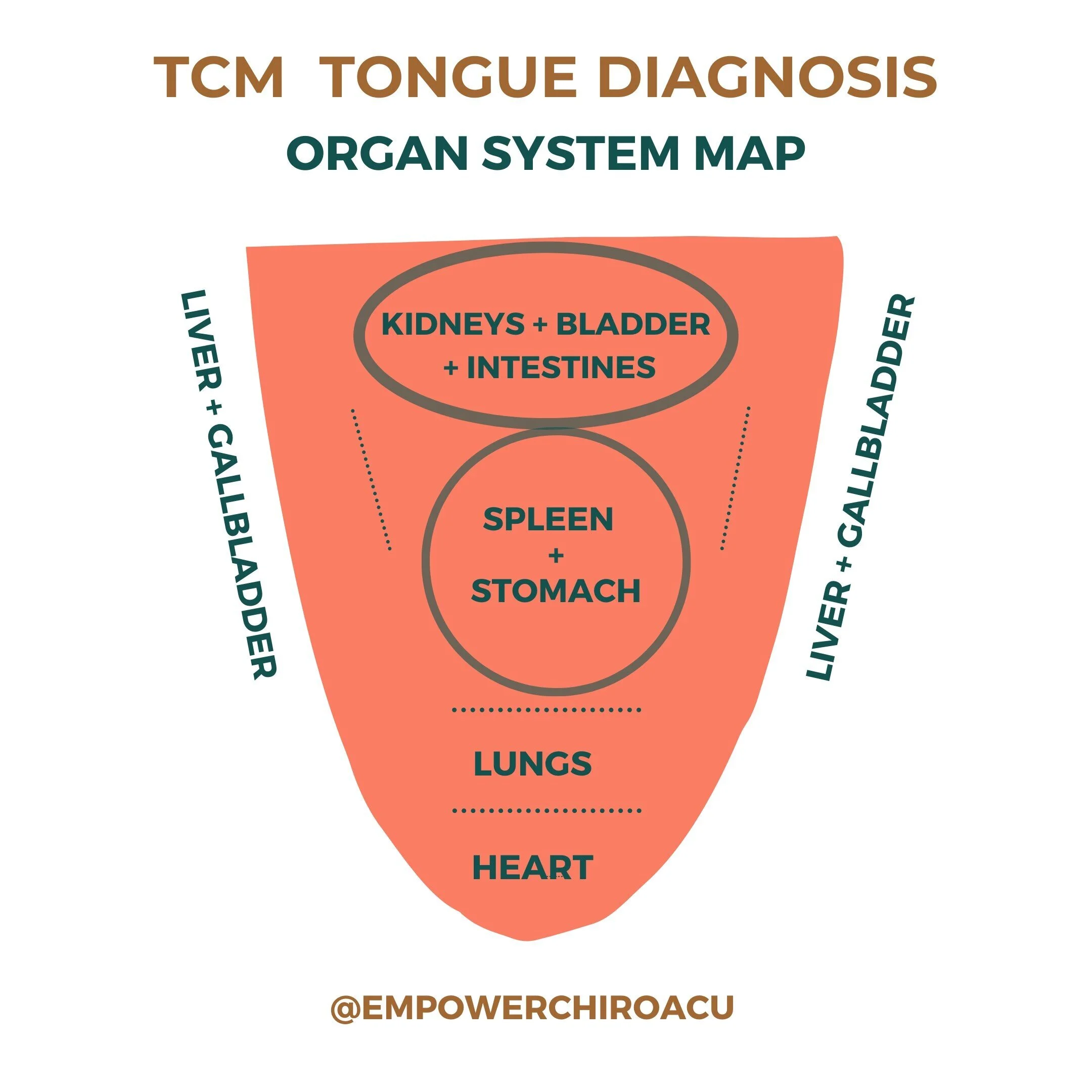
Yet in TCM, Tongue Diagnosis is an essential part of our assessment and evaluation.
This is because the tongue is like a road map for your health—a mirror of what’s taking place in the body. It offers observable, objective information about the state of blood circulation, hydration, digestion, energy levels, and so much more.
In fact, each area of the tongue corresponds to the Acupuncture meridians where your vital energy or Qi (pronounced “chee”) flows through, and the internal organ systems themselves.
As you see from this diagram, the key organ systems depicted on the tongue include the Heart, Lungs, Spleen/Stomach, Liver/Gallbladder plus the Kidneys/Bladder/Intestines. Each governs a section of the tongue much like how they are laid out in the body: the front of the tongue represents the organs in the upper body, the middle of the tongue representing the digestive center...and so on-and so forth.
For us practitioners, Tongue Dx is a cornerstone for understanding your current health (like a snapshot of the present), while also providing a peak into the past to detect what underlying imbalances lead to your present concerns.
WHAT’S IN A TONGUE?
There are several defining characteristics your Acupuncturist will look for when observing your tongue, like:
SHAPE - is it small, enlarged, puffy, pointed?
COLOR - is it pale, red, purple, grey?
TEXTURE - is it dry, wet, glossy, or greasy?
BODY FEATURES - are there cracks, spots, ulcers, raised speckles, or deviations?
COATING or “FUR” - is it thick, thin? Where is the fur distributed?
FUR FEATURES - what is the texture or color?
A HEALTHY TONGUE:
A “normal” and relatively healthy looking tongue is a fresh pink color, a medium thickness with a rooted light white coat on it (rooted meaning it cannot be scraped off easily). It is free of cracks, spots, ulcers, or teeth marks.
WHAT DOES YOURS SAY?
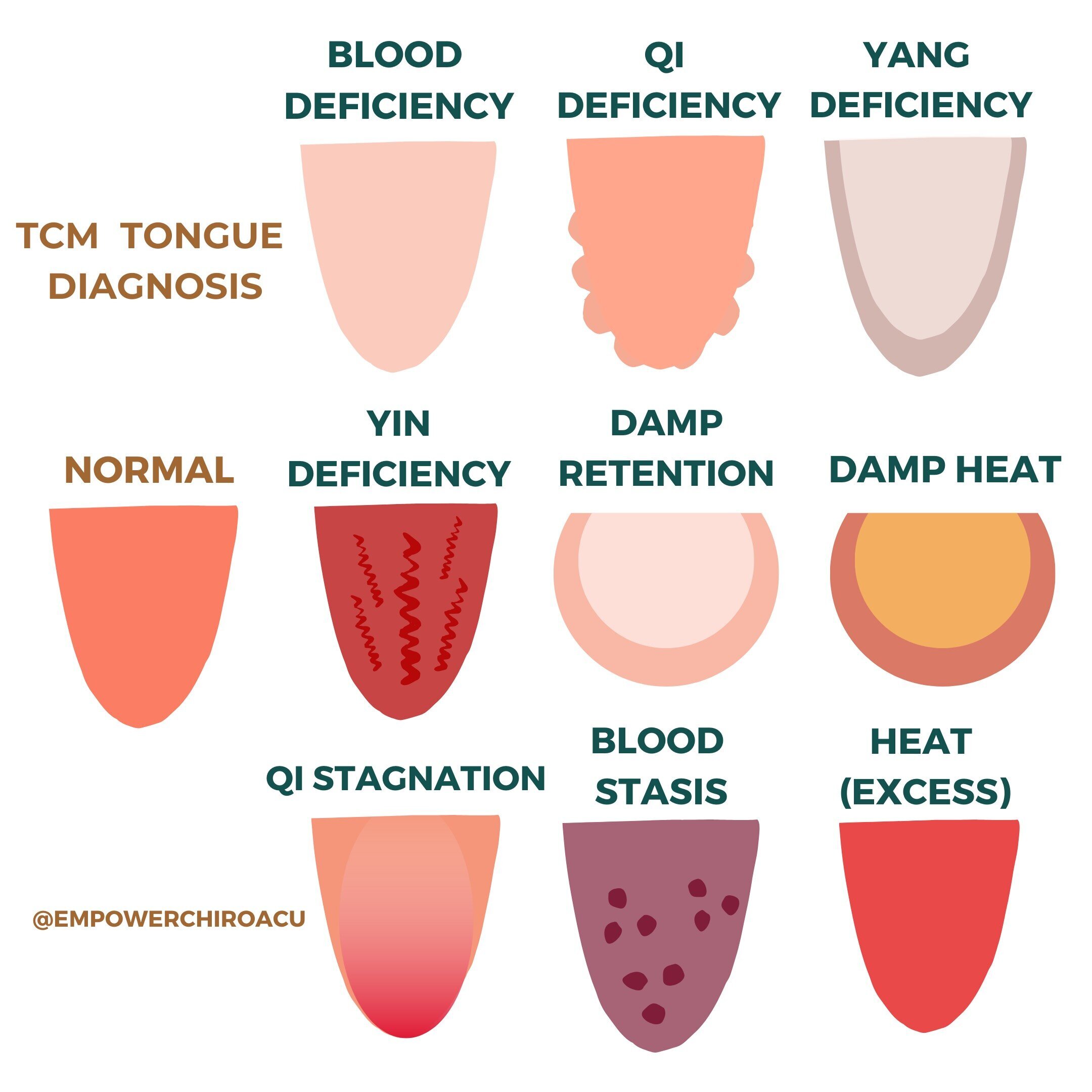
QI DEFICIENCY
Pale tongue with thin white coating, a few spots, and teeth marks
Qi Deficiency is typical if someone struggles with low energy, poor appetite, shortness of breath with exertion, bloating/gas, and worry
BLOOD DEFICIENCY
Pale tongue with little to no coating, there could also be teeth marks
Blood Deficiency is typical in someone who struggles with dizziness, fatigue, dry/thinning hair, brittle/ridged nails, palpitations, poor memory and concentration, insomnia, light/absent menstrual periods
YIN DEFICIENCY
Red to crimson tongue, usually thin, little to no coating and cracks
Yin Deficiency is typical in someone who struggles with irritability, night sweats, insomnia, hot flashes due to menopause, joint/muscle stiffness (dryness), ear ringing
YANG DEFICIENCY
Pale tongue that is puffy or enlarged, usually with a thick and white coating
Yang Deficiency is typical in someone who feels cold easily, has chronic knee and/or back pain, low spirits, is emotionally apathetic or depressed, low libido, feels exhausted/burnt-out, thyroid issues (usually hypo-)
DAMP RETENTION
Swollen or puffy tongue with a white, greasy (think oily vs. glossy wet) coating
Dampness is typical in people who have issues with indigestion, bloating, gas, loose stools, nausea, pain or muscle aches that are worse with wet/humid/damp weather
DAMP HEAT
Swollen, red tongue with a yellow-greasy coating
Damp heat is often seen in those who experience chronic inflammatory conditions such as IBS/IBD, skin eruptions (acne, psoriasis, eczema), UTIs, are easy to anger, have pain or muscle aches that are worse in hot/humid weather
QI STAGNATION
Tip of the tongue will be red, sometimes the sides too, with a thin, white coating.
Qi stagnation is evident in those who are easily stressed or emotionally upset; there is a tendency towards mood swings, muscle tension and pain patterns worse with emotional stress, pre-menstrual tension, etc.
BLOOD STASIS
Purple or mauve tongue with dark red or black spots “speckles.” Veins underneath the tongue are likely dark, enlarged, or distended.
Blood stasis is common in those who have varicose veins, leg pain, certain types of headaches, chest pain, liver spots, cold limbs, skin dryness or scaling (lacks moisture/luster), pain patterns will have a sharp or stabbing quality.
HEAT
Red tongue with a thin and yellow coating, can be red spots on tongue body too
Heat is often seen in those who subjectively feel or “run hot,” sweat easily, high thirst, constipated, short tempered, easily agitated, have skin issues (red-painful acne)
A WORD TO THE WISE
Of course, these are generalizations and very basic diagnostic patterns.
Everyone’s tongue is just as unique as their body’s constitution. Depending on the person, there can be a mixture of features on the tongue—and patterns in their diagnosis!
With that said, noticing variations on your tongue is normal and should not be a cause for alarm. These features alone do not definitively mean something is wrong or pathologically awry in those organ systems.
So please, a word to the wise: don’t panic looking at your tongue.
Accurate tongue diagnosis is a skill that Acupuncturists spend four years mastering in school and sharpening in practice.
So if you have questions or concerns, consult with a Licensed Acupuncturist (LAC) who is trained to decipher the nuances present on your tongue—but more importantly, detect the underlying root issues to the symptoms you are facing.
TO SCRAPE OR NOT TO SCRAPE…
Oh and one more thing! If you do decide to meet with an Acupuncturist—your first visit or a follow up—please do not brush or scrape your tongue beforehand! We need to be able to see the full picture—tongue coating and all.
It will help make our evaluation of what’s taking place internally more accurate.
Now find yourself some good lighting, a mirror, and go ahead—stick out your tongue.
How can Acupuncture can help you?

Sharyn Peavey Photography
BEHIND THE BLOG
HI, I’M LAUREN DYER.
I am the Co-Founder and Doctor of Acupuncture (DAC) here at Empower in New Gloucester, Maine.
I specialize in supporting those seeking holistic and integrative support for Chronic Pain, Emotional + Mental Wellness, and GI Health.
In Traditional Chinese Medicine, these are all areas that not reflect one another—and the ways they show up are different for each person.
If you struggle with chronic pain, anxiety, depression, sleep issues, the effects of trauma, a difficult transition, or something else, I am here help you navigate your healing process. To learn more about my approach to care and see if our practice would be the right fit, click here.
Please note, the information presented in this article is for educational purposes only and is not meant to replace the diagnosis or treatment for ANY medical condition mentioned above. Please seek out appropriate care as needed.

Acupuncture for Anxiety
Anxiety is a symptom. It’s a normal reaction to abnormally stressful situations yet it’s exploded as the diagnosis of our nation. Find out how Acupuncture treats the root causes to anxiety plus the science behind why this ancient medical practice is so naturally effective.
By DR. Lauren Dyer
DAC, LAC, DIPL. AC (NCCAOM)

It’s the diagnosis of a nation.
Anxiety eclipses depression as the most common mental health concern in the US, affecting 40 million adults. Given the current state of affairs, this number is without a doubt higher, affecting everyone in their own ways.
Even before these strange and uncertain times, anxiety has been on the rise.
The American Psychiatric Association ran a poll on 1,000 U.S. residents in 2017, and found that two thirds were “extremely or somewhat anxious about health and safety for themselves and their families and more than a third are more anxious overall than last year.” In 2018, poll was repeated and Anxiety had spiked by another 5 percent.
These findings are on par with Google Trends publishing how searches for anxiety doubled over the past five years.
Okay, so anxiety is more common than ever.
But what is it exactly?
Anxiety is an intense, excessive, and persistent worry and fear about everyday situations that interferes with daily life.
For some people, it’s more situation-based. For others, it’s an everyday struggle. Even if anxiety is common, that does not make it a disorder, or someone who has it mentally ill (more on that controversial topic and why I wholeheartedly disagree with that language here).
Anxiety is a symptom.
When not caused by nutrient deficiencies, imbalanced blood sugar, or a pharmaceutical side-effect, anxiety is a normal reaction to abnormally stressful and traumatic situations.
“Anxiety is a normal response to abnormally stressful or traumatic situations”
Like grief and anger, anxiety is part of the human experience that should not be deemed a disorder and stigmatized. Unfortunately there is still a lot of shame people feel around acknowledging they have anxiety, let alone choosing to seek help. If you are one of those people, I am writing this for you. You are not alone, nor can you expect yourself to “be positive” all of the time. Not only is that unrealistic, the pressure of trying to keep-up that facade just makes it worse. In my personal and professional opinion, what is realistic is reframing the way we as individuals, a culture, and healthcare system look at mental health.
Think about it…
What if instead of labeling anxiety a “mental disorder” that needs to be chemically managed, we considered it a symptom that can be healed?
If we did, treating it could be reframed too, with less emphasis on numbing your feelings, and mode on holistically addressing the root culprits and circumstances causing it in the first place.
“What if instead of labeling anxiety a mental disorder that needs to be chemically managed, we considered it a symptom that can be healed?”
Thankfully, there are branches of medicine doing just that: Functional Medicine, Naturopathic Medicine, Psychoneuroimmunology, and of course, Traditional Chinese Medicine (TCM).
The Mind-Body Connection in Eastern Medicine:
For centuries, Traditional Chinese Medicine (TCM) has known how interconnected the body, mind, and emotions are: how long-suppressed and intense can emotions can become trapped in the body, later showing up as physical health issues. Likewise, when an organ system is affected, its paired emotion will surface (think: alcohol’s effect on the liver, which for some drinkers leads to anger). You can learn more about the Emotion-Organ Relationship in a blog I wrote here.
Thousands of years ago, TCM practitioners may not have used the term “anxiety,” but they established that worry damages the Spleen and Stomach—what modern medicine now calls our Gut Microbiome. Or how fear weakens the Kidneys—which we today know how our adrenal glands (which rest on top of the Kidneys) release stress hormones when we feel threatened.
It’s no coincidence. TCM has always accepted how the mind affects the body, and vice versa.
So how does Acupuncture help with anxiety?
A Personalized Approach:
When supporting those with anxiety, my approach is personalized to you and your experience of it. Just as the reasons behind anxiety are different, the way it shows up in the body can be too—so why would I (let alone more conventional avenues) treat it as if they were the same?
As an Acupuncturist, one of the ways I identify the root causes comes from asking questions during your first appointment.
When you get anxious, do you experience:⠀⠀
a racing mind, especially at night?⠀⠀
night sweats or tossing/turning?⠀
palpitations worse when you’re tired?⠀⠀
chest tightness or pain? ⠀⠀
dizziness or trouble focusing?⠀⠀
full-on panic attacks? ⠀
a sensation of having a lump in your throat?⠀
easily frightened or indecisive?
a wave-like feeling in your gut? ⠀⠀
loose stools or stomach pain?⠀⠀
sadness or shortness of breath?⠀⠀
angry or irritable easily?
vivid or disturbing nightmares?⠀
I also make sure to ask:
If there is a history of trauma (if so, only share what you are comfortable with)
What your diet is like (to rule out any potential nutrient deficiencies)
What medications you are on (to rule out if there is a side-effect taking place)
Each answer tells me something different about how anxiety is impacting your internal health.
It also signals to me which Acupuncture points to select, foods or herbs to suggest, etc.
Let’s say 10 people have anxiety—but the ways it shows up in their body, the events that have shaped its emergence, their associated symptoms and triggers can be (and often are) vastly different. As a result, there will be 10 different diagnoses and they will each receive 10 totally different treatments, all tailored to their needs.
This is one of the reasons Acupuncture is as effective as it is at alleviating anxiety: it is far from a one-size fits all approach.
By understanding your unique constitution, Acupuncture addresses the root causes behind your anxiety while treating the unique physical symptoms that arise with it.
The Science Behind It:
If you are curious about the how Acupuncture improves anxiety, check out this research:
IT REGULATES YOUR STRESS RESPONSE Via HEart rate variability
One of the most sensitive measures of the body’s ability to cope with stress is something called your Heart Rate Variability (HRV). Unlike heart rate which is the number of beats per minute, HRV is the time in between each beat. HRV measures how well your nervous system adapts to stress.
HRV is measured in the heart, but it originates in the Autonomic branch of your Nervous System which controls your sympathetic (fight-or-flight) and parasympathetic (rest-and-digest) responses.
When HRV is high, it means your nervous system is balanced—your body can adapt to stress in your environment. A high HRV is desirable because it means your brain can switch between being on high-alert and calm at appropriate times. This can look like being able to fall asleep easily when it’s time for bed and having the energy to focus at work during the day. With anxiety these can be hard to come by.
When HRV is low, it means one branch is dominating (usually the sympathetic) and sending stronger signals to your heart/organs than the other. It means your body is working on overdrive to maintain its daily functions, which leaves fewer resources for exercising, caregiving, or whatever your daily activities require. A low HRV is common if you have chronic anxiety because your body is stuck in survival mode, even when a trigger is not immediately present.
The good news is, Acupuncture has been shown to improve the body’s ability to cope with stress and lower anxiety by improving HRV:
“In patients with mild depression or anxiety, verum acupuncture but not sham acupuncture was associated with significant reductions from baseline in mean resting heart rate at 5 and 15 min after needle application…These results suggest that verum acupuncture modulates autonomic activity in response to alterations of internal and external environments, and thus reduces overall anxiety in patients with depression or anxiety.” (MacDonald, 2019)
IT RELEASES ENDORPHINS
A summary of clinical findings on Acupuncture for anxiety details how:
“When the body is under stress, an area of the brain called the hypothalamus releases neurochemicals and research shows that acupuncture can calm this response. Acupuncture has also been shown to increase the release of endorphins, the body’s own ‘feel-good’ chemicals, which play an important role in the regulation of physical and emotional stress responses such as pain, heart rate, blood pressure and digestive function. All of these mechanisms have a direct effect on reducing anxiety.”
By releasing endogenous (self-made) pain-relieving opioids and feel-good endorphins, Acupuncture supports your body’s ability to restore, regulate, and heal itself in the ways it needs—drug-free.
IMPROVES SLEEP
Quality sleep is hard to maintain when your mind can never shut off.
A literature review on Acupuncture for psychiatric conditions reported that it significantly improved sleep quality in patients with anxiety related insomnia. One of the studies cited reported that after treatment, “urine 6-sulfatoxymelatonin (a metabolite of melatonin) levels were normalized and several polysomnographic measures, as well as self-reported fatigue, sleepiness, anxiety, and level of depression, were significantly improved. Combined with the evidence of treatment efficacy in depression-related insomnia, acupuncture may have broader utility in neuropsychiatric disorders with impaired quality of sleep.”
Whether you have trouble falling asleep, staying asleep, or wake at the same time every night (the reason why can be found by looking at the TCM Body Clock), an Acupuncturist can help determine what imbalances are present to give you a specific treatment geared towards your symptoms.
IT Supports gut health
It is estimated that your gut bacteria produce about 95 percent of your body's serotonin, the neurotransmitter that influences both mood and gastro-intestinal activity (American Psychological Association). 95 percent!
This discovery has prompted a new area of research in what is called the Gut-Brain Connection. As novel as it seems, it confirms what Traditional Chinese Medicine has known for centuries about the mind-body connection. Gut feelings are no longer just a saying, they’re real.
Given how rich the gut is in bacteria and nerve fibers, it has been called a second brain—the enteric nervous system. The current evidence reveals that contrary to popular belief, the brain is not solely responsible for dictating the body’s activities. Instead, the gut-brain communication goes both ways:
“While doctors have always known that mental conditions such as stress and anxiety can lead to gastrointestinal issues – butterflies in your stomach for example, or stress-induced loose stools or nausea – increasingly it seems that the cause-and-effect relationship between mental state and gastrointestinal state may work in reverse, as well. An upset gut (ie. inflammation) can trigger changes in our mental state, suggesting that an upset in the balance of gastrointestinal (bacteria and) function could conversely be sending signals to your brain that cause neurological and emotional symptoms such as depression, anxiety and mood swings.” (Lanyon 2019)
Digestive complaints such as poor appetite, abdominal pain, nausea, and irregular elimination are some of the most common symptoms I see in patients that come in for anxiety. Thankfully, Acupuncture has been shown to have positive effects on these symptoms, especially for Irritable Bowel Syndrome (IBS) where a meta-analysis demonstrated Acupuncture’s effectiveness to be clinically and statistically significant.
SIGNALS OF SAFETY
In light of the many ways the scientific community can explain how Acupuncture helps anxiety, I have my own view that sums them up:
I like to think of Acupuncture as giving your body signals of safety.
By figuratively tapping into the nervous system, Acupuncture gives your mind and body the stillness to deliver the message that “I am safe, I am okay, I can re-balance now” so it can do just that. Along with mobilizing your body’s own resources, bloodflow, and neuro-endocrine signals, Acupuncture can help you reclaim a sense of calm and resilience to withstand future stress.
If you want to experience it for yourself and are someone who:
Has tried anti-anxiety medications in the past but found they didn’t work for you
Has tried anti-anxiety medications but didn’t like they way they made you feel or taking them lead to unwanted side-effects
Wants to taper-off your medication while having a natural therapy to support you during that process (Do not discontinue or adjust any medications without talking to your prescribing doctor first.)
Wants a dual physical and energetic medicine to compliment counseling sessions you attend, with the option to coordinate care with your therapist
Wants to avoid medications
Has “tried everything else”
Has been dismissed by practitioners and wants a more compassionate and holistic support system that ultimately puts you in the driver seat of reclaiming your health
Wants strategies and recommendations for anxiety that are meant to support long-term relief rather than a superficial quick-fix
I would be happy to support you.
Ready to get started?
Have questions?

Hi, I’m Lauren Dyer.
I am the Co-Founder and Doctor of Acupuncture here at Empower in New Gloucester, Maine.
I specialize in supporting those with Chronic Pain, Emotional + Mental Wellness, and GI health.
In Traditional Chinese Medicine, these are areas that not only relate to and reflect one another, but are also close to my heart. I consider myself lucky because I truly love Acupuncture and what I do. Getting to connect with others while empowering them to live with a renewed sense of relief, inner peace, and vitality are some of my greatest joys.
So if you are struggling with chronic pain, anxiety, depression, sleep issues, the residual effects of trauma, a difficult transition, or other related symptoms, I am here to help you navigate and own your healing process.
SOURCES:
Amorim D; Amado J; Brito I; Fiuza SM. (2018, May). Acupuncture and Electroacupuncture for Anxiety Disorders: A Systematic Review of the Clinical Research. Retrieved from https://pubmed.ncbi.nlm.nih.gov/29705474/
Campos, M. (2017, November 22). Harvard Health Blog, “Heart rate variability: A new way to track well-being.” Retrieved from https://www.health.harvard.edu/blog/heart-rate-variability-new-way-track-well-2017112212789
Chao, G.-Q., & Zhang, S. (2014, February 21). Frontiers In Genetics, “Effectiveness of acupuncture to treat irritable bowel syndrome: A Meta-Analysis.” Retrieved from https://www.ncbi.nlm.nih.gov/pmc/articles/PMC3930986/
Cheng-Hao, MacDonald, Chen, Yi-Hung, & Iona. (2019, January 10). Frontiers in Psychiatry, “The Effects of Acupuncture on Glutamatergic Neurotransmission in Depression, Anxiety, Schizophrenia, and Alzheimer's Disease: A Review of the Literature. Retrieved from https://www.frontiersin.org/articles/10.3389/fpsyt.2019.00014/full
Lanyon, C. (2019, August 19). “What TCM has known for centuries: 'New' Brain-Gut Connection.” South China Morning Post. Retrieved from https://www.scmp.com/lifestyle/health-wellness/article/3022925/brain-gut-connection-how-tcm-has-known-centuries-what
Russel, D., et al. (n.d.). Acupuncture as a Therapeutic Treatment for Anxiety. Retrieved from https://www.evidencebasedacupuncture.org/present-research/acupuncture-anxiety/

Can Beauty Hurt? How Chemicals in Skincare + Cosmetics Can Impact Your Health
Switching to cleaner beauty goes beyond skin deep. Learn how chemicals in your skincare items can be harming your hormones, mood, and physical health—plus what you can do about it with these easy-to-implement tips.
BY Dr. Lauren dyer
DAC, LAC, DIPL. AC (NCCAOM)

Spring cleaning isn’t just for your closets or yard anymore. Have you ever thought of updating your skincare routine? This blog is all about why…
According to the Environmental Working Group (EWG)—a non-profit, non-partisan organization— “on average, women use 12 personal care products a day, exposing themselves to 168 chemical ingredients.” Men use six, exposing themselves to 85 unique chemicals.”
Think about that for a second...
How many do you apply a day?
Looking at the safety of cosmetics + everyday products is something I talk about with patients, especially if they are coming in with:
depression
anger + irritability
food/chemical sensitivities
headaches/migraines
pms-related symptoms
hormonal acne, hives, etc
waking from 1-3am regularly
Why am I calling out these symptoms?
They point to a root imbalance in the Liver.
Why does this matter?
It’s all connected. The chemicals in cosmetics + related products get absorbed into your skin and therefore, your bloodstream. Eventually they make their way to other other organs to be processed including, yep—your Liver.
LIVER HEALTH
The Liver is a known key detox organ. It filters your blood, breaking-down chemicals from food, drinks, drugs, plus personal/household products. It also helps keep your sex, thyroid, and adrenal hormones in check.
In TCM, we refer to these roles more broadly in saying the Liver ensures the free flow of qi and blood〰️When bombarded by chronic chemical exposure, my patients notice their mood, energy, skin, and hormones suffer.

How clean are your cosmetics?
To determine how safe your products are, be weary of ingredients you cannot easily pronounce, including these known endocrine disruptors:
Formaldehyde and formalin (shampoos)
Synthetic “fragrance” and “parfum”
Parabens (methyl-, propyl-, isopropyl-)
Phthalates (DBP, DEHP, DEP and others)
Sodium lauryl sulfate (SLS) and others
Aluminum chlorohydrate (deodorants)
RESOURCES
Can’t remember this list? No problem.
There are mobile apps that let you look up your go-to products & their ingredients!
You can even scan items through your phone & compare safety ratings before you buy:
Here are some apps I recommend:
Think Dirty
GoodGuide
Healthy Living
For more information, visit the Environmental Working Group’s Skin-Deep Database.
My Top Clean Beauty Picks:
🌿 Beauty Counter
🌿 Neal’s Yard Remedies
🌿 Badger Balm
🌿 Primally Pure
Not affiliated, just love these brands.
Hope you found this blog helpful. If you are ready to start cleaning up your makeup routine, know that your liver, skin, and mood will thank you.

"Mental Illness" or A Slippery Slope to Disempowerment?
What if instead of labeling mental health conditions as “illnesses” that need to be managed, we viewed them as symptoms that can be healed? Learn how this new branch of science is reframing the narrative around mental health in a way that empowers you to heal on a deeper level.

THE PROBLEM WITH YOU
Modern medicine implies there’s a problem with you. The conventional model looks at our bodies as separate parts, almost machine-like, in that a series of inputs and outputs need to be manipulated and managed with synthetic chemicals to “fix” us. When applied to “mental illness,” this model distills our complexities and lived experiences into “disorders” and “diseases” with little-to-no options besides dependency on a one-pill-fits-most approach. ⠀
⠀
The culture of this model means that we blame our pain, shame our emotions, and disregard our lifestyle. Inevitably, when discomfort arises (as the human experience will have it) we fear it—and race to find the quickest ways to silence or numb its presence. ⠀
The disempowering and problematic message it implies, especially when it comes to symptoms related to mental illness, is that the problem is YOU: your brain chemistry, your genes. ⠀
⠀
It makes the human experience a disorder. It positions YOU as the victim of your life and leaves little room to learn from and grow through the root issues causing your pain. ⠀
⠀
Despite well-intentioned messages to “de-stigmatize mental illness,” it unintentionally reinforces the narrative that there is nothing you can do about it. YOU (and your chemical imbalance) is the problem and drugs are the answer. This ideology dismisses other factors that are often masquerading as the “illnesses” this model is so quick to define. Thankfully, there is a paradigm shift happening...⠀

YOU ARE THE SOLUTION
Psychoneuroimmunology (PNI) is an emerging branch of science that looks at mental health not as “disorders,” but as a multi-faceted relationship between the gut, endocrine, and the immune systems. It explores the effects of stress on the body in how it triggers these systems to react.
Similar to the study of Epigenetics, it sees “your symptoms [as] imbalances related to lifestyle exposures that are interacting with your genes—that is, your stress, food, sleep (or lack thereof), chemical exposures...” It also takes into account “your beliefs around the power you have to create your life.”
These variables and how your genes are expressed are far more in our control than the current model of “mental illness” allows us to believe.⠀
⠀
In the new PNI model, anxiety and depression (for example) are not diseases—they are symptoms of inflammation. As there are many roads to inflammation, this new model acknowledges the deeper entanglements between the body’s physical, emotional, hormonal, and environmental responses—and how these responses are as unique as the person experiencing them.⠀
⠀
Guess what this means? You are not the problem. YOU are the solution.⠀
⠀
This model argues that you were not born with bad genes or have too little serotonin. It is more likely that you are experiencing an unhealthy inflammatory response, driven by cortisol dysfunction, a leaky gut, chemical exposures, nutrient deficiencies—not to mention “psychospiritual baggage” from childhood wounding and conditioning, trauma responses, toxic relationships, and more.⠀
⠀
In order to start untangling these responses and identify the roots to our symptoms, we need to start demanding more than “a pill to match the ill.” We need to honor our lived experiences, understand our complexities, and have a desire to look beyond impersonal disease labels and into our day-to-day lives for the answers if we want to heal our minds and bodies, rather than numb them. ⠀
⠀
This means finding holistic practitioners who value this approach while advocating that our conventional doctors do the same.⠀
Here at Empower, we also value taking a nuanced, personalized, and holistic approach to mental and emotional well-being. Our practice would be the right fit for you if:
SHARYN PEAVEY PHOTOGRAPHY
You want to work with a Doctor of Acupuncture whose clinical focus and passion is supporting those seeking care for Mental + Emotional Health and/or Pain Management (especially since Chinese Medicine understands how emotions manifest physically in the body).
You value working with an Acupuncturist who combines a traditional approach with modern biomedical evidence + wellness insights to give you an integrative style of care adapted to your needs.
You are willing to discuss and learn how chronic stress, unprocessed emotions, difficult life experiences, lifestyle, and environmental factors can be affecting your mental health.
You are open to receiving guidance, tools, resources, and support to take your mental health and overall well-being into your own hands.
You value a collaborative approach with a clinician who will help you navigate your healing process with compassion.
To learn more about Acupuncture and our approach, we invite you to reach out with any questions.
SOURCES:
Inspiration From Own Yourself by Dr. Kelly Brogan, MD
Brogan, K., & Marriott, N. (2019). Own Yourself. Carlsbad, CA: Hay House, Inc.

Zombies, Liver Toxicity, and Leaky Gut: Why Painkillers Should Have New Warning Labels
As popular as Tylenol, Advil, and other common pain killers are, they are not as harmless as our culture has lead us to believe. Learn about the lesser-known, surprising, and severe ways these these tiny pills affect our bodies and brains.
By Dr. Lauren Dyer
(DAC, LAC, DIPL. AC - NCCAOM)

“Just take a Tylenol.”
You hear it in commercials, in conversation with co-workers, family, and friends—maybe you were told this since childhood so now you don’t even question it. But should you? Why be in pain if you don’t have to? Isn’t it harmless?
The short answer is no. Tylenol, Advil, and other common pain killers are not as benign as we have been culturally indoctrinated to believe. Just because they are available over-the-counter does not make them safe or safer than prescription opioids. Recent studies show that even the suggested dose can cause harm to our bodies and negatively affect our mental + emotional health.
Before we get into that, here are some things to keep in mind...
The main ingredient in Tylenol is acetaminophen. It is the most common drug compound in the United States, found in over 600 medicines. It is estimated that 23% of the population (about 52 million American adults) takes a medicine containing acetaminophen a week.
If it’s so popular, what’s the big deal, right?
For starters, acetominophen is the #1 cause of acute liver failure in America, with a little over 110,000 injuries and deaths linked to Tylenol (and its generic versions) annually. By impairing the liver’s ability to detoxify chemicals ingested, even the “safe” suggested dose poses a risk.
Tylenol’s toxicity is linked to depleting glutathione, an essential antioxidant responsible for managing free radicals and inflammation in the body. Given how vital glutathione is for brain health, it’s no wonder that ingesting Tylenol blunts our emotions—limiting our ability to feel pleasure or pain just one hour after use. This observation was so startling that researchers called it a “zombification” effect.
That’s right.
Zombies.
Tylenol figuratively turns us into the undead by diminishing our sentience.
A 2015 study from Ohio State University had half of its participants take 1,000mg of Tylenol while the rest took a placebo. After one hour each group was shown pleasant and disturbing photos. In both scenarios, those who took Tylenol had lower sensitivity and emotion ratings compared to those who took a placebo.
For reference, 1,000mg is two Extra-Strength Tylenol pills, with the “safe” upper limit being 3,000mg. So the fact that a “normal” dose can exert that much of a physiological and psychological change is pretty alarming, if not totally disturbing.
The implications for how such a seemingly harmless drug contributes to “psychiatric-like” side effects such as depression, irritability, and apathy should not be ignored.
What About Anti-Inflammatory Drugs?
Unfortunately, Non-Steroidal Anti-Inflammatory Drugs (NSAIDS) like Motrin, Aleve, Advil, or Ibuprofen are not innocent either. In order to reduce aches and fevers, this class of drugs works by reducing the number of prostaglandins in the body—molecules that protect our gut lining, support inflammation needed for healing, and blood clotting. The result from habitual use? Increased gut permeability (aka “leaky gut” which sets-off an auto-immune response linked to chronic illness & psychiatric-like symptoms) ulcers, and intestinal bleeding.
Not everyone who takes NSAIDS will get side effects, but the odds are not in our favor. A 2005 study by Gastroenterologist Dr. David Graham used a small endoscopic camera to compare structural intestinal changes between NSAID users vs. non-users. He found that 71% of NSAID users had damage in the small intestine lining compared to 10% of non-users. The interesting but insidious fact was that nobody in the study reported GI symptoms, even though the damage was already done. For women it’s worth noting that NSAIDS interfere with hormone balance and fertility. Studies show they can inhibit ovulation and lower progesterone levels after just 10 days of use.
Now What?
On a personal and collective level, it’s time to re-consider our reflex to reach for Tylenol and other OTC pain-killers at the first sign of discomfort.
Instead of viewing our symptoms as inconveniences that need to be silenced, endured, or defeated, what if we appreciated them for how intelligent they are—that they communicate with us when something isn’t right. Slowing down and tuning inwards to listen to why they are appearing in the first place is the first step to healing them.
Understandably, you need to work, provide, and pain is incredibly inconvenient.
But is it worth the liver toxicity, numbing our humanity, while leaving us with an increased risk for chronic illnesses because the integrity of our intestinal lining has been compromised? Let’s not forget, once the drugs wear off, the pain inevitably returns.
What would you rather do?
A Better Way…
If you want pain relief that is safe, natural, and evidence-based, you can consider:
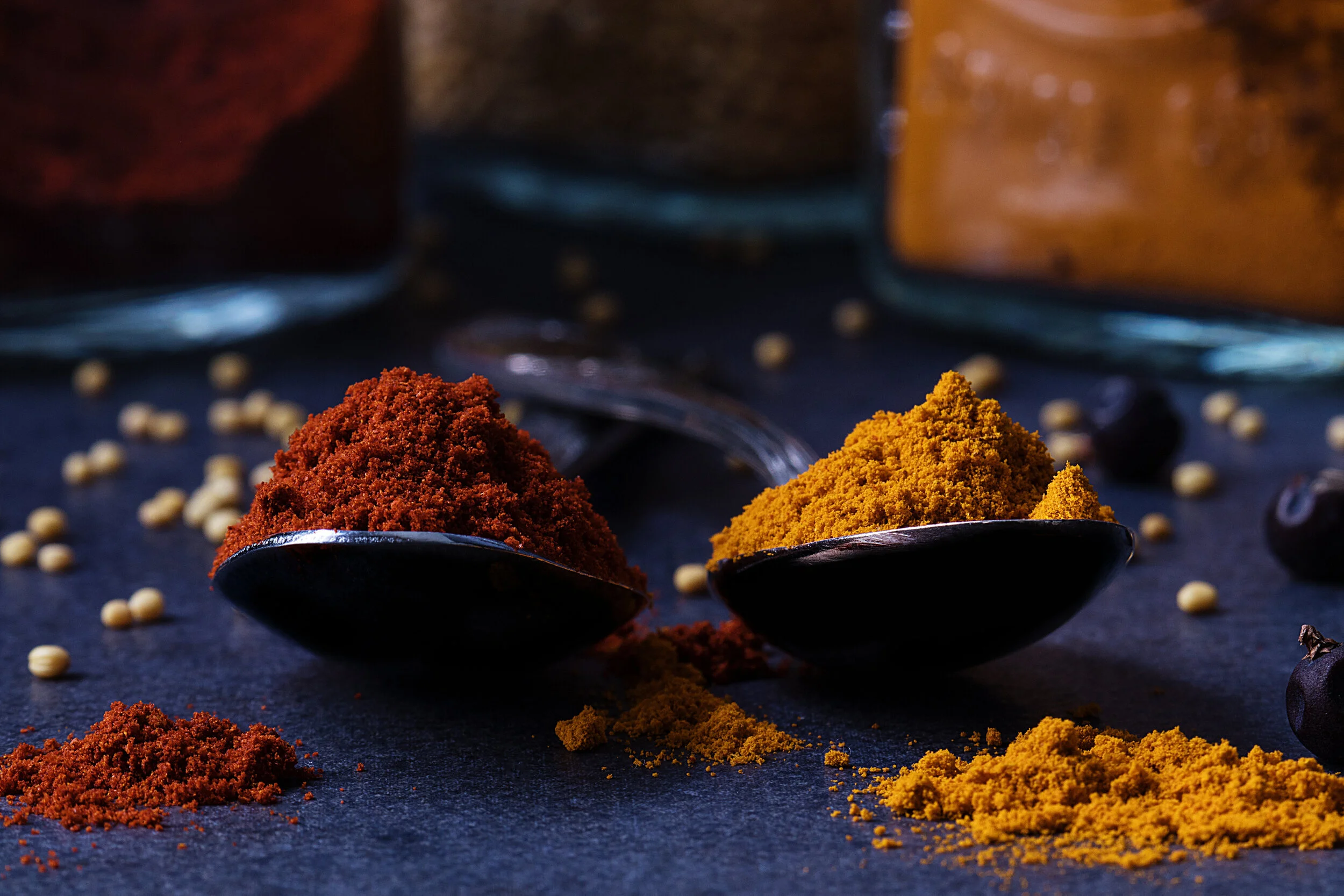
TUMERIC
For centuries tumeric has been known as a medicinal herb in Chinese Medicine and Ayurveda for its anti-inflammatory properties. I suggest patients add it to their cooking or supplement with it regularly for preventative measure.
CURCUMIN
Curcumin is tumeric extract, as its the active ingredient that rivals NSAIDS at decreasing inflammation. Studies show it can be used for general pain, osteoarthritis, menstrual cramping, post-operative pain and more.
Be sure to talk with your healthcare providers before taking any supplements.
CHIROPRACTIC
SHARYN PEAVEY PHOTOGRAPHY
Our Chiropractic care is comprehensive. Instead of just relying on joint manipulations, we look at the bigger picture of how your muscles, movement patterns, relate to your pain. When you collaborate with us, we will give you the tools and knowledge to understand these relationships, plus how to prevent and improve your pain beyond your appointments.
By helping you take your pain and healing process into your own hands, our patients see quicker results with longer-lasting relief.
These are some of the reasons why we are not your average Chiropractor.
ACUPUNCTURE

By mobilizing the body’s healing response, promoting the release of endorphins and endogenous opiates (your body’s own pain-killers), and regulating your brain’s stress response, Acupuncture works on both the body and mind to creates a solid foundation for sustainable relief.
Through our integrative and holistic approach, we can identify and treat the root causes to your pain—allowing for a complete healing process with lasting relief rather than masking it.
Learn more about Acupuncture for chronic pain, mental health, and related conditions in this overview of scientific research here.
So next time someone says “just take a Tylenol,” weigh its effects, do your own research, and talk to your healthcare provider so you can make the most informed decision for your well-being.
To learn more about how we can manage your pain safely and effectively, reach out with any questions.

SHARYN PEAVEY PHOTO
Hi, I’m Lauren Dyer, the Co-Founder and Doctor of Acupuncture here at Empower in New Gloucester, Maine.
I specialize in supporting those for Chronic Pain Management and Mental/Emotional Well-Being. In Traditional Chinese Medicine, these are areas that not only relate to and reflect one another, but are also close to my heart. I consider myself lucky because I truly love Acupuncture and what I do. Getting to connect with others while empowering them to live with a renewed sense of relief, inner peace, and vitality are some of my greatest joys. So if you are struggling with chronic pain, anxiety, depression, sleep issues, the residual effects of trauma, a difficult transition, or other related symptoms, I am here to help you navigate and own your healing process.
DISCLAIMER:
This article is for educational purposes only. We are not responsible or claiming to be responsible for any recommendations regarding the continuation or discontinuation of any of the pharmaceutical drugs mentioned. The information presented in this article is not meant to diagnose or replace the treatment for any medical condition. Please seek out professional care as needed.
SOURCES
A Mind of Your Own and Own Yourself by Dr. Kelly Brogan, MD
“Visible Small Intestine Mucosal Injury in Chronic NSAID Users” PMID: 15645405
“Curcumin” on Examine.com (Science-Based Nutrition & Supplement Information)
Acupuncture for Pain Relief: Research Summaries on Evidence-Based-Acupuncture

Can Your Joints Predict The Weather?
Joint pain? Achey muscles? Arthritis? Learn what it means when your pain flares up with the specific weather patterns in Chinese Medicine and how Acupuncture can manage your pain naturally.
Dr. Lauren Dyer

You know when it’s coming…
The rain, the next cold-front, or maybe the hot and humid weather bother you more instead. When the aches and pains first started, you suspected the weather might have a role to play, but by this point the connection is clear—and it’s not enough to blame the barometric pressure. The good news is, Chinese Medicine has understood and validated the relationship between how the environment affects our bodies and health for centuries.
If your pain is worse with certain weather patterns, this is an important diagnostic clue. Understanding the types of weather that your pain worse is one of the many ways Traditional Chinese Medicine TCM) looks beyond your symptoms and conventional diagnosis to treat the root cause(s) to your pain.
So what can it mean when your pain flares up with windy, damp, cold, or hot weather?
This can point to a Painful Obstruction (Bi) Syndrome.
PAINFUL OBSTRUCTION SYNDROME
In TCM, there is a saying: “where there is free flow, there is no pain; where there is a lack of free flow, there is pain.” Painful Obstruction or Bi Syndrome refers to acute or chronic pain and stiffness in the musculo-skeletal system (bones, joints, tendons, ligaments, muscles) due to the obstructed flow (stagnation) of qi and blood. With Bi Syndrome, there can be varying qualities of pain, numbness, tingling, heaviness, swelling, sensations of heat or coolness, and decreased mobility. However, a defining quality is pain that is worse with the presence of natural elements: WIND, DAMP, COLD, and HEAT.
What Causes IT?
Our bodies are reflections of our external environment, and they are always adapting to keep up with day-to-day and seasonal changes. Just like how viruses, bacteria, and allergens are key culprits for externally-contracted illness conventional medicine, in TCM, our environment, and the elements that define it, can become pathogenic as well. These elements are more likely to “invade” and become generated internally from:
Prolonged exposure from living, working, or exercising in a certain climate
Acute exposure from dressing inadequately for the weather
Weak digestion, poor appetite, dietary influences
Overuse of antibiotics, anti-inflammatory (“pain-killers”), Proton Pump Inhibitors (PPI), etc.
Genetic predisposition; lowered immune resistance
Overwork (physically + mentally) as well as insufficient exercise; poor ergonomics
Direct Injury (creates blood stasis) or Post-Surgical Pain (build-up of scar tissue and/or use of metal internally)
In summary, Painful Obstruction can affect individuals who are both chronically stressed and suffer from Qi + Blood Stagnation as well as those with a Qi + Blood Deficiency, each of which creates an environment for pathogens to invade and become lodged in the body.
CONVENTIONAL CONDITIONS THAT ARE RELATED
From a biomedical perspective, Bi Syndrome can correspond with:
injury due to biomechanical strain
Osteoarthritis
Tendonitis
Bursitis
Fibromyalgia
Carpal Tunnel syndrome
Sciatica
degenerative joint disease
Gout
Scleroderma
Ankylosing Spondylitis
Rheumatoid + Psoriatic arthritis, and more
(Please note this is not an exhaustive list)
TYPES OF BI syndrome
Chinese Medicine requires careful differential diagnosis to specify the underlying causes and pathogens causing the painful obstruction in the first place. As mentioned above, there are both internal and external causes that can contribute to Bi Syndrome, as well as different patterns based on the location and nature of the painful obstruction. What follows is a generalized pattern differentiation according to the most common Bi Syndromes due to external pathogens in TCM.
WIND BI: Pain comes and goes, rapidly moving to different parts of the body; creates stiffness with limited range of motion. The location is not-fixed. Wind makes the pain worse. Because this type moves of Bi from area to area, it is also known as "Wandering Bi."
COLD BI: Pain is constant, severe, tight, or sharp in nature; it is fixed in location. Cold temperatures worsen the condition, and warmth improves it. You might have an aversion to cold. Because this type of Bi usually results in severe pain, it is also known as "Painful Bi."
DAMP BI: Pain is characterized as soreness, dull, achy, and throbbing. Dampness tends to linger and sink in nature: there might be swelling in the skin, muscles, and joints, especially in the knees and ankles. Pain can also be accompanied by sensations of heaviness or numbness. The pain tends to remain fixed. Dampness worsens the condition and you usually have an aversion to rainy, humid weather because of it.
HEAT BI: Heat predominates when a Wind-Cold-Damp pathogen becomes entrapped over time, creating a move severe form of qi stagnation—qi constraint. When constraint forms it festers, and unable to “vent” or be released, it generates heat internally. Heat Bi is characterized by inflamed, red, swollen joints. You might have an aversion to heat since that makes the pain worse.
Bi Syndromes can develop as combinations, such as Wind-Cold, Cold-Damp, Damp-Heat, Wind-Heat, etc. Only a Licensed Acupuncturist can accurately diagnose Painful Obstruction Syndrome and differentiate which type of Bi you have, if any shared above.

ACUPUNCTURE FOR HOLISTIC PAIN RELIEF
There is a dire need to manage pain more holistically in our healthcare system. Between the Opioid Crisis, emerging evidence on the dangers of steroid injections, and a culture where popping pills is a reflex at the first sign of discomfort, the status quo is problematic because it promotes superficial symptom support—not healing. I am grateful to be able to share this medicine with others, because it can be a transformative experience when you allow yourself to tune into what your body is telling you through our symptoms. It is with this awareness that we can begin to address the root of the issues you are experiencing instead of settling for “quick-fixes” with potentially harmful side effects. Whether you are considering Acupuncture as your first-choice or last-resort, at our practice we will help you navigate your health with personalized care—giving you the resources and tools to improve your pain beyond your treatments and time working together. That is how we strive to give you a foundation for long-term wellness and sustainable pain relief.
“I have had neck pain from arthritis that became excessive from a fall and now I can say I am pain free thanks to the treatments of Dr. Lauren Dyer. My everyday is more comfortable. I had some strong doubts of any improvement because arthritis is not curable but have been shown it can be improved. I will recommend her to evaluate any concerns. Very personal treatment plan for each need. I am very happy having gone to Empower!”
You are more than your pain.
You are more than your diagnosis.
Just because you have been told you have a condition does not mean you need to live with it, or in pain, for the rest of your life.
If you are ready to start feeling better, I would be happy to connect with you.