

Five Tips For Health This Fall
In Traditional Chinese Medicine, living seasonally is essential to prevent illness and safeguard the balance of our body’s systems. Here are five of my most essential tips to stay healthy this Fall!
By Lauren R. Dyer, DAC

Photo by Allison Christine via Unsplash
In Traditional Chinese Medicine (TCM), living with the seasons is essential to prevent illness and safeguard the balance of our body’s systems. This is because as our external environment changes, our internal (physical) health shifts too. Some examples of this are apparent everyday, even if we do not give them much thought. For instance in the Fall: it gets darker earlier prompting our circadian rhythms to adapt, our mood might change with decreased sunlight and absorption of Vitamin D, while the chill in the air tenses our muscles right up. Just like how these changes are anticipated from a Western view, for centuries doctors of Chinese Medicine also observed this natural phenomena. They came to understand how the seasons impacted our physiology, and as a result, gained wisdom of ways to adapt.
In TCM, Fall has a nature all its own: it is the season where the dynamic, warming, and active Yang energy of the summer wanes into the more structured, cooler, and introspective Yin phase of the year as we prepare for Winter. Autumn is associated with the Metal element and Lungs which govern the skin, respiratory system, immunity, and the emotions of grief/sadness.
The Fall is also dominated by dryness and wind which can attack the Lung, leading to common symptoms such as a scratchy throat, a dry nose, chapped lips, dry cough, etc. To protect the body from these factors, preventative health for Fall focuses on warming and strengthening the body.
So as the temperature drops, leaves change, and cold-season abounds, here are some ways to stay healthy this Fall according to TCM:
Tip #1:
Enjoy Mostly Warm-Cooked Foods & Drinks

In TCM, keeping your digestive fire stoked is important for your overall well-being. Having a strong Spleen and Stomach are essential for nutrient absorption, distribution, and a healthy immune system (aka your gut microbiome). When the temperature cools down, so does the energy of our digestive system. This is why cold and raw foods (salads, smoothies, ice cream, yogurt, etc.) can damage your digestive fire when consumed too frequently, especially in the cooler months. Instead, opt for foods that are cooked. These will warm your body and keep your digestive fire revving this time of year. After all, tis' the season for soups and stews anyways. If you still need your daily salads, try adding a cooked veggie, meat, or grain (like quinoa or rice) to offset the cold nature of the greens. Or if you are more of a shake/smoothie person, try not adding ice, using fresh (not frozen) fruits/veggies, adding a slice of fresh ginger root, or waiting to drink it at room temperature. You might find yourself pleasantly surprised with what one week of eating (and drinking) warm things will do for your digestion, especially if you notice you tend to bloat easily, get tired after meals, or have IBS-like symptoms such as loose stools. To learn more about optimal digestion in TCM, check out this post of ours on Instagram.
Tip #2:
Keep Your Neck Covered

Just like how allergens, bacteria, and viruses can be seen as pathogenic factors in the West, in TCM, environmental elements (such as Wind, Dryness, Heat, Fire, Dampness, Cold, etc.) can become the cause for disharmony and illness in excess through exposure or when generated internally. Wind for example is considered a vehicle for illness, as it carries airborne pathogens that can make us sick. It's no coincidence that the back of the neck is considered the "Wind Gate" and several Acupuncture points along that area have "Wind" in their name (like GB-20 "Wind Pool" and DU 16- "Palace of Wind"). When our neck is exposed in the Fall, we can get sick more easily. This is also why a stiff neck is considered an early symptom of a cold in TCM. So, whether you want to don a scarf the size of a blanket or at least a jacket with a high collar, remember to cover your Wind Gate this Fall.
Tip #3: Work Through Your Sadness + Grief

Each season invites us to change in different ways, and part of that process usually means letting go in others. Fall signals the start into the end of the year…a time for introspection while looking at what mindsets and habits are no longer worth your energy, and re-structuring accordingly (think: back to school, Virgo season energy). In TCM, Fall is also associated with the Lungs, which govern emotions of grief and sadness. One of the reasons I fell in love with TCM is how it respects and understands how emotions (especially when excessive or repressed for too long) can affect our physical health. For example, sadness and grief tend to manifest in the Lungs as respiratory issues: a sudden (or chronic) cough, asthma, wheezing, and chest tightness, or repeatedly waking between 3-5am (the Lung’s time according to the Chinese Medicine Body Clock). Because the Lungs neighbor the Heart, there can also be palpitations, anxiety, and a racing beat.
When repressed for too long, grief can also generate an imbalance in the Lung’s partner-organ: the Large Intestine. Just as the Lungs are responsible for taking in, the Large Intestine is for…you guessed it, letting go. Our ability to release control and the hold the past has on us is reflected in the Large Intestine. Rather than thinking of letting go as “forgetting,” think about it as giving yourself the chance to move forward. It’s not that grief goes away, but the ways it shows up and affects us can change over time.
Acupuncture is a gentle way to create the space and a safety for the body to release the heavy emotions and somatic memories tied to experiences of difficult transitions and loss.
Tip #4: Drink Lemon, Ginger & Pear Tea

When life gives you lemons, like a cold or chronic allergies, make a Lemon, Pear & Ginger Tea to combat it! It's basically a warm, spicy lemonade... Plus, it's high in Vitamin C, thanks to the Lemon, while the Ginger has anti-inflammatory properties, making it a necessary combo for cold season. In TCM, pears are said to nourish and moisten the Lungs - ideal for those pesky dry coughs and sore throats. Honey balances the ginger's spiciness, and if it is local, it will have bonus immune-supporting properties. This is a tea I make in large batches and sip as a background drink during the day - because let's face it, how can I care for others if I am sick? I don't have time for that.
Chances are, you don't either.
Here is a quick and easy recipe:
What You'll Need: 1 Pear, 1 Lemon, 3-4 pieces of Ginger Root (sliced into 1" pieces), Honey to taste, (the more local, the better)
What You'll Do: Combine the sliced lemon, ginger root, and pear into a small pot. Add 4 cups of water (6 cups for a more diluted flavor). Bring to a boil and then simmer for 5 minutes. Serve and add honey to taste! Allow it to cool as needed & enjoy!
Note: This tea is meant to have a strong flavor, but if you want something more mild, reduce the ginger. If you have signs of internal "heat" aka prone to anger/irritability, yellow phlegm, fever, excess sweating, or hot flashes - ditch the ginger.
Tip #5: Get Acupuncture & Gua Sha Preventatively

Photo Credit: Sharyn Peavey Photography
Acupuncture is a ancient medical therapy that uses hair-thin, single-use, and sterile needles to facilitate your body’s own healing process—and supporting your immune system (aka your “Wei Qi” or Defensive Qi) is a huge part of that. Acupuncture has been shown to reduce inflammation, release endorphins, promote circulation while restoring the proper functioning or energy (called “Qi") to your body’s systems. There are several Acupuncture points that I use regularly to alleviate sinus pressure, stop headaches, reduce allergies, clear phlegm, and strengthen the Lungs.
Also, remember the "Wind Gate" from Tip #2? During the Fall, Gua Sha is another versatile soft-tissue therapy applied along your upper neck and shoulders at the earliest signs of a cold (stiff neck, sniffles, you know the feeling) to keep it from progressing. Compared to antihistamines and other OTC allergy medications which rarely come without annoying-to-harmful side effects (or rebound-symptoms from overuse such as the case with nasal decongestants), Acupuncture and Gua Sha are effective therapies that treat beyond the symptom level to promote sustainable relief.
In addition to individualized care, we will collaborate on strategies for you to adopt beyond the treatment setting so you can take your health into your own hands—because that is my goal for you and all of my patients. For additional guidance going into the season ahead, feel free to reach out or when you’re ready, schedule online.
Thank you for reading & take care!
—Dr. Lauren Dyer
“Recently I have had sessions of acupuncture with Lauren, and it was beyond helpful. I originally went to see her for help with my anxiety and the initial consult took us further into a number of issues I had been having. After just two sessions so much had improved. It was like a fog had been lifted. And one of the biggest difference was she has started to treat my allergies and despite being in peak
Pollen season; I DIDN’T NEED TO TAKE ANY ALLERGY MEDICINE!
Usually I would take take about 4 a day during this time. I went in for one thing and Lauren guided me through a treatment cycle that helped improve my daily life noticeably on many levels.”
. . .
Disclaimer: Information contained in this article is not meant to diagnose or treat any medical symptoms/condition. None of these claims are intended to infer prevention of the flu, common cold, or other respiratory illnesses. If you have any health concerns or an emergency, seek out medical attention. If you are a patient of ours with a health concern, contact us so we can help and make appropriate referrals as needed.

Can Beauty Hurt? How Chemicals in Skincare + Cosmetics Can Impact Your Health
Switching to cleaner beauty goes beyond skin deep. Learn how chemicals in your skincare items can be harming your hormones, mood, and physical health—plus what you can do about it with these easy-to-implement tips.
BY Dr. Lauren dyer
DAC, LAC, DIPL. AC (NCCAOM)

Spring cleaning isn’t just for your closets or yard anymore. Have you ever thought of updating your skincare routine? This blog is all about why…
According to the Environmental Working Group (EWG)—a non-profit, non-partisan organization— “on average, women use 12 personal care products a day, exposing themselves to 168 chemical ingredients.” Men use six, exposing themselves to 85 unique chemicals.”
Think about that for a second...
How many do you apply a day?
Looking at the safety of cosmetics + everyday products is something I talk about with patients, especially if they are coming in with:
depression
anger + irritability
food/chemical sensitivities
headaches/migraines
pms-related symptoms
hormonal acne, hives, etc
waking from 1-3am regularly
Why am I calling out these symptoms?
They point to a root imbalance in the Liver.
Why does this matter?
It’s all connected. The chemicals in cosmetics + related products get absorbed into your skin and therefore, your bloodstream. Eventually they make their way to other other organs to be processed including, yep—your Liver.
LIVER HEALTH
The Liver is a known key detox organ. It filters your blood, breaking-down chemicals from food, drinks, drugs, plus personal/household products. It also helps keep your sex, thyroid, and adrenal hormones in check.
In TCM, we refer to these roles more broadly in saying the Liver ensures the free flow of qi and blood〰️When bombarded by chronic chemical exposure, my patients notice their mood, energy, skin, and hormones suffer.

How clean are your cosmetics?
To determine how safe your products are, be weary of ingredients you cannot easily pronounce, including these known endocrine disruptors:
Formaldehyde and formalin (shampoos)
Synthetic “fragrance” and “parfum”
Parabens (methyl-, propyl-, isopropyl-)
Phthalates (DBP, DEHP, DEP and others)
Sodium lauryl sulfate (SLS) and others
Aluminum chlorohydrate (deodorants)
RESOURCES
Can’t remember this list? No problem.
There are mobile apps that let you look up your go-to products & their ingredients!
You can even scan items through your phone & compare safety ratings before you buy:
Here are some apps I recommend:
Think Dirty
GoodGuide
Healthy Living
For more information, visit the Environmental Working Group’s Skin-Deep Database.
My Top Clean Beauty Picks:
🌿 Beauty Counter
🌿 Neal’s Yard Remedies
🌿 Badger Balm
🌿 Primally Pure
Not affiliated, just love these brands.
Hope you found this blog helpful. If you are ready to start cleaning up your makeup routine, know that your liver, skin, and mood will thank you.

What Self-Care Really Means
Learn why the “treat yourself” mentality is problematic when it comes to self-care and how you can make a life you don’t need to escape from.
Lauren Dyer, D.Ac

Self Care…
The phrase has become so trendy in the health & wellness space. It’s great how there is this collective awareness of a need to invest in ourselves.
But at what cost?
Does “self care” need to be an indulgence or expensive? Do we need to feel guilty or selfish for it to count? Does it need to be an escape from reality?
As a clinician, I treat so many people who describe themselves as “run-down,” physically and emotionally, because they feel like they cannot put themselves first. They struggle with anxiety, depression, insomnia, and exhaustion from trying to keep it all together and be the person they need to be for their job, partner, kids, or friends. The way self-care is marketed to us seems to make some object, vacation, or indulgent behavior a “quick fix” for momentary abandonment of how ‘wired and tired’or ‘stressed and depressed' we really are. So how we create consistent space for our needs is something I have been reflecting on quite a bit lately.
That is why I have come to think of self care as a process instead of a purchase.
Instead of an occasional reward or some “me time,” I see it as a continuous practice of self-development and growth. By holding ourselves accountable, we can create the life we want, one that allows us to give to others without neglecting ourselves in the process. Treating yourself is great but this concept has to go deeper than that if we want to enjoy life instead of just get by—if we want to have sustainable shifts in our mental outlook and emotional health.
Even I reward myself and still think there’s a slippery slope when “self care” becomes synonymous with “treat yourself.”
Here are some of my favorite quotes explaining why by Forbes and Thought Catalog :
“Self-care is not an indulgence, it is a discipline. It requires tough-mindedness, a deep and personal understanding of your priorities, and a respect for both yourself and the people you choose to spend your life with”
“Ironically when you truly care for yourself…you are actually in a much stronger place to give of yourself to those around you. You will be a happier parent, a more grateful spouse, a fully engaged colleague”
“It often means looking your failures and disappointments square in the eye and re-strategizing”
“It is living a way that other people won’t, so maybe you can live in a way that other people can’t”
“True self care is…making the choice to build a life you don’t regularly need to escape from.”
“It is no longer using your hectic and unreasonable life as justification for self-sabotage in the form of (substance abuse) and procrastination”
“If you find yourself having to regularly indulge in consumer self-care, it’s because you are disconnected from actual self-care, which has very little to do with “treating yourself” and a whole lot to do with parenting yourself and making choices for your long-term wellness.”
“It is learning how to stop trying to “fix yourself” and start trying to take care of yourself…and maybe finding that taking care lovingly attends to a lot of the problems you were trying to fix in the first place”
“It is becoming the person you know you want and are meant to be”
At the end of the day, self care can’t always be purchased.
Or at least, it shouldn’t be.

Thankfully there are plenty of inexpensive ways to practice it, such as:
GO FOR A WALK
TAKE A BATH (OR A NAP)
MAKE A COZY DRINK OR HEALTHY MEAL
WEAR YOUR FAVORITE OUTFIT
CALL A FRIEND OR FAMILY MEMBER
UNPLUG FROM SOCIAL MEDIA
SPEND TIME OUTDOORS & IN NATURE
WRITE A LIST OF THINGS YOU ARE GRATEFUL FOR
WATCH A FAVORITE SHOW OR READ A BOOK FOR PLEASURE
MEDITATE WITH A FREE APP LIKE CALM OR HEADSPACE
There are so many options! Find what works for you and regularly build it into your life.
So… What does self care mean to you?
. . .
Disclaimer: Information contained in this article is not meant to diagnose or treat any medical symptoms/condition. If you have any health concerns or an emergency, seek out medical attention. If you are a patient of ours with a health concern, contact us so we can help and make appropriate referrals as needed. If you have questions, feel free to reach out via email at empowerchiroacu@gmail.com. Thanks for reading!

Wisdom for Winter Wellness
Learn how Chinese Medicine can support your Kidneys and Adrenal health this Winter, plus why it’s important!
Living Seasonally with Chinese Medicine
By Dr. Lauren Dyer, L.Ac, DAC

In nature, Yin embodies all that is cold, dark, reflective, and directed inward.
Knowing this, it makes sense why Winter is considered the most “Yin” time of the year in Traditional Chinese Medicine (TCM): the daylight is shorter, the temperature is frigid, and nature is nudging us to conserve our energy.
In the early days of TCM (5,000 years ago) practitioners and the agricultural communities they served understood how nature was mirrored in their health—how our bodies change in response to our environment. After all, we are just as dynamic as the seasons: our internal systems have their own rhythms and are always shifting towards homeostasis.
By embracing the changes each season brings and adopting habits that will help us live in harmony with them, we are truly benefiting our mind and body.
Here are some key associations for the Winter in TCM:
YIN ORGAN: Kidneys
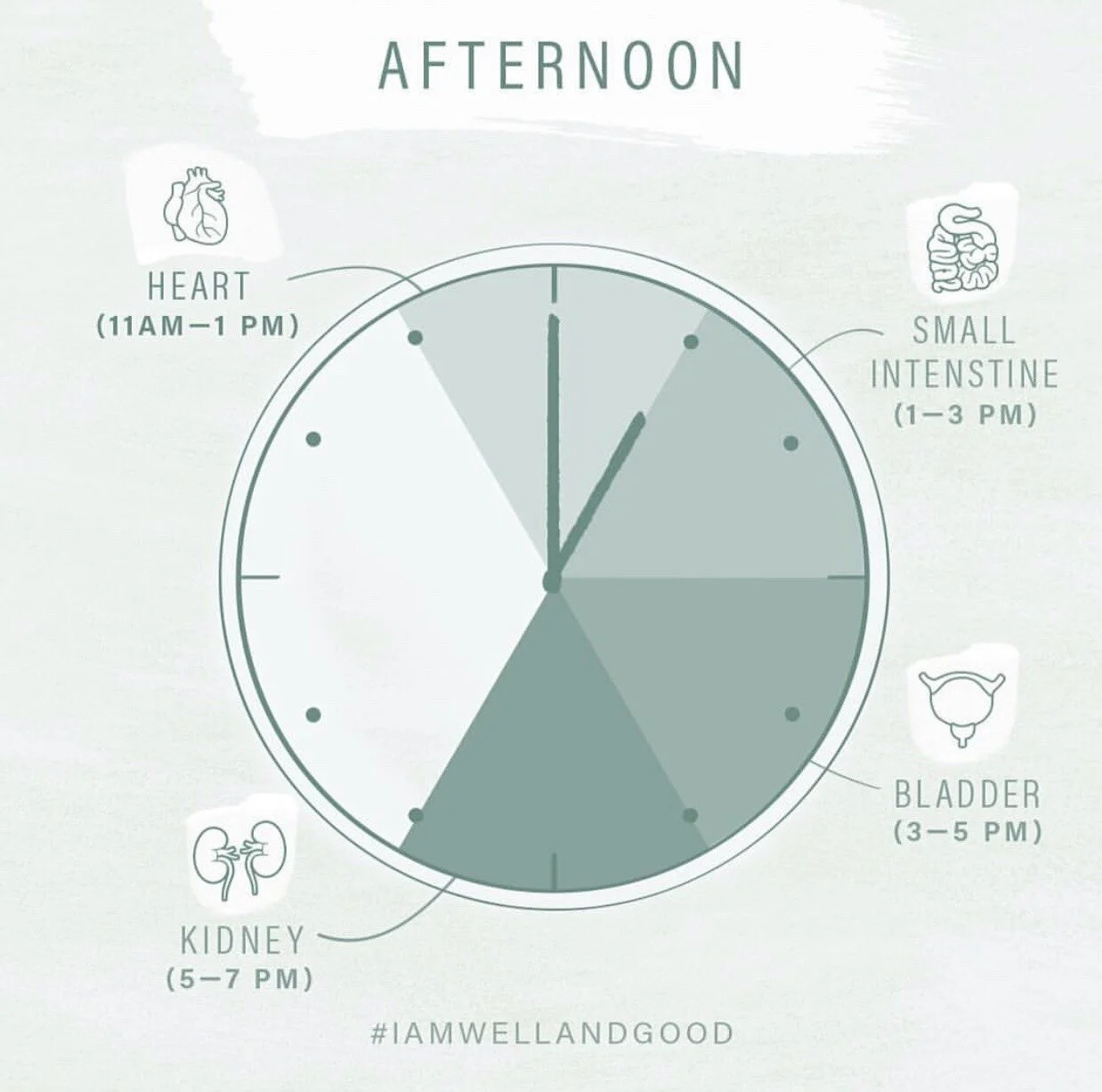
KIDNEY TIME: 5 - 7pm
CLIMATE: Cold
ELEMENT: Water
COLOR: Black
FLAVOR: Salty
EMOTION: Fear
TISSUES: Hair, Bones, Marrow
So what does all of this mean? Here’s what you can do to be well this Winter:
Nourish Your Kidneys

PC: Ali Harrison @lightandpaperali
The Kidneys are ruled by Winter. In other words, they are the organ that require more attention and protection during this time of year.
In TCM, the Kidneys are considered our “life gate.” They store our vital energy, called “Essential Qi” and Essence (Jing) which we are born with. The Kidney’s are like our body’s batteries; they are responsible for growth & development, metabolism, temperature regulation, reproduction, as well as managing our energy levels on a daily basis. Just like with any battery, there’s a limit to how much we can expend. Chinese Medicine reminds us to use our Kidney energy and Jing wisely since we are only born with so much. Although it naturally declines with age (no matter how much we try), there are lifestyle habits and choices that can deplete it sooner.
THINGS THAT WEAKEN THE KIDNEYS
Too little sleep
Long hours of physical/mental exertion
Prolonged exposure to a cold environment
Feeling stressed all. the. time.
Nutrient depletion from poor diet
Drug & Alcohol abuse
Chronic Illness
How to know if your Kidneys need support…
In practice, there are some key symptoms I look for when assessing if someone has, what is called, a “Kidney Deficiency.” This does not mean there is something “wrong” with your Kidneys in the sense that you need to seek out immediate medical attention. However, they are indications that an imbalance exists and, if not addressed, can decline over time:
Kidney Qi Deficiency
Translation: You have a mild depletion in Kidney Qi. This is one of the earlier, less chronic patterns I see where the Kidney’s ability to hold, store, and filter is compromised:
Dizziness, tinnitus (ear-ringing), decrease in hearing, weakness in low back, low back pain that is dull/sore/achey in nature, back pain worse with exertion, chronic fatigue, low libido, nocturia (bed-wetting in the evening), mild anxiety, depression, takes a longer time than normal to recover from illness, frequent illness.
Related Conditions: Adrenal Fatigue, Low Back Pain, Insomnia
Kidney Yang Deficiency
Translation: You have lower reserves of “Yang” energy that warms, moves, and promotes the functions of other organs. As a result, you will notice ‘cold signs’ and conditions where poor circulation, slowed metabolic and mental processes, plus a lack of ‘holding’ is apparent:
Extreme sensitivity to cold, feeling cold constantly (despite attempts to layer/warm up), cold feet, cold/sharp pain sensations in low back, weakness in knees and back, forgetfulness, feeling withdrawn, depression, exhaustion, sluggish metabolism, weight gain, loose stools, edema, urinary incontinence, low libido, infertility, impotence and spontaneous ejaculation in men; amenorrhea (loss of menstrual cycle) and ovulation disorders in women
Related Conditions: Reynaud’s Syndrome, Hypothyroidism, Dementia, Depression
Kidney Yin Deficiency
Translation: You have lower reserves of “Yin” energy that is responsible for cooling, anchoring, and moisturizing the body’s tissues and other organs. This manifests in ‘heat signs’ and conditions where dryness, malnourishment, and a ‘rising’ dynamic is evident:
Dry mouth or throat (especially at night), always thirsty, night sweats, restless sleep, hot flashes, feelings of heat in chest/palms/feet, dark urine, constipation, tinnitus (ear ringing), declining muscle mass (thin body type), stiffness in joints/muscles, chronic low back soreness, forgetfulness, panic attacks, hair falls out easily, for men: premature ejaculation, for women: recurrent UTIs, vaginal dryness, infertility
Related Conditions: Kidney Stones, High Blood Pressure, Perimenopause, Hyperthyroidism
Kidney Essence Deficiency
Translation: You have significantly lower reserves of Kidney energy in the form of “Essential Qi” and Jing, possibly from birth, a combination of lifestyle habits that ‘used up’ your reserves, or just because you might be older in age. Jing can be compared to our genetics. Just like how DNA is a blueprint for our development (with several factors—including lifestyle—influencing its expression later on in life), Jing is the deepest-stored component that affects our health and longevity. When a Jing deficiency is apparent, conditions that affect aging, the bones, teeth, and the brain/mental functioning are apparent.
Physical disabilities (especially in the bone-level), slow recovery from injuries and illness, cognitive/learning disabilities, delayed growth/puberty, accelerated aging (looking older than you are), premature hair loss, hair graying, severe forgetfulness/memory loss, infertility (low ovarian reserve, poor egg/sperm quality)
Related Conditions: Alzheimer’s, Genetic Disorders, Osteoporosis, Rickets
Please Note: These are not all of the patterns and symptoms associated with the Kidneys, but reflect the most common ones to give you an idea of what each pattern looks like.
Now that we’ve established why it’s important to protect the Kidneys, read on for some tips on how this season.
Winter Wellness Tips

PC: Joanna Keler @joanna_keler
LAYERS ARE LIFE: STAY WARM
Cold is not just a temperature in Chinese Medicine, it’s a pathogenic factor—and the most obvious culprit for that nasal congestion and stiff neck in the Winter months. Think about what happens when you’re cold: your body becomes tense. Why? The cold constricts blood vessels, limiting circulation and nourishment to our muscles and joints, causing pain and stiffness. I work with a lot of people during the Winter who have pain from exposure to the cold. Yes, Acupuncture plus Moxa (TCM heat therapy) is helpful, but prevention is still the best medicine, so here are some precautions you can take:
Keep your neck and back covered: these are areas where pathogens like the cold and wind can easily enter the body. The back of the neck is called the “Wind Gate” for this reason! If left exposed to the elements, you’re more likely to catch a cold. So layer up, especially outdoors or if you work in a cold environment.
Keep you feet warm—The Kidney channel begins on the sole of the foot, so warm feet will prevent cold from moving up the channel and affecting the Kidneys themselves. Anytime I see cold feet in practice, I know the Kidneys are involved and can use some strengthening.
PC: WELL + GOOD @iamwellandgood
Keep your digestive fire strong
During the Winter, we want to be mindful of supporting our Kidneys as well as our digestive system—and in TCM, these are closely linked. The Kidneys are considered the root of our “digestive fire” (if you picture a pot on the stove: the Kidney Yang is the flame below) which maintains our metabolic processes, making sure our Spleen/Stomach can transform and distribute nutrients efficiently. In the Winter, you can keep your digestive fire strong by eating mostly warm, easily digestible, and cooked foods. This is not the season for shakes, smoothies, and salads, whose cold-raw nature can make our digestive system work harder to process what its being given, leading to sluggish digestion, bloating, gas, and loose stools.
I’m not saying you can’t or shouldn’t have any cold-raw foods (that is not realistic), but at least in moderation. Pairing those foods with some warming spices (ginger, cardamom, cinnamon) or a cooked side-dish helps too. In general, Winter is a time for cooking foods for longer at lower temperatures, which makes stews and soups ideal.
Crave Salt? Moderation is key for embracing the flavor of Winter, Salty, which nourishes the Kidneys. A Little salt is good and even necessary for our bodies, just not too much. If your energy drops at 5-7pm, this means your Kidneys (and Adrenals) can use some support; having a salty snack at this time can help.
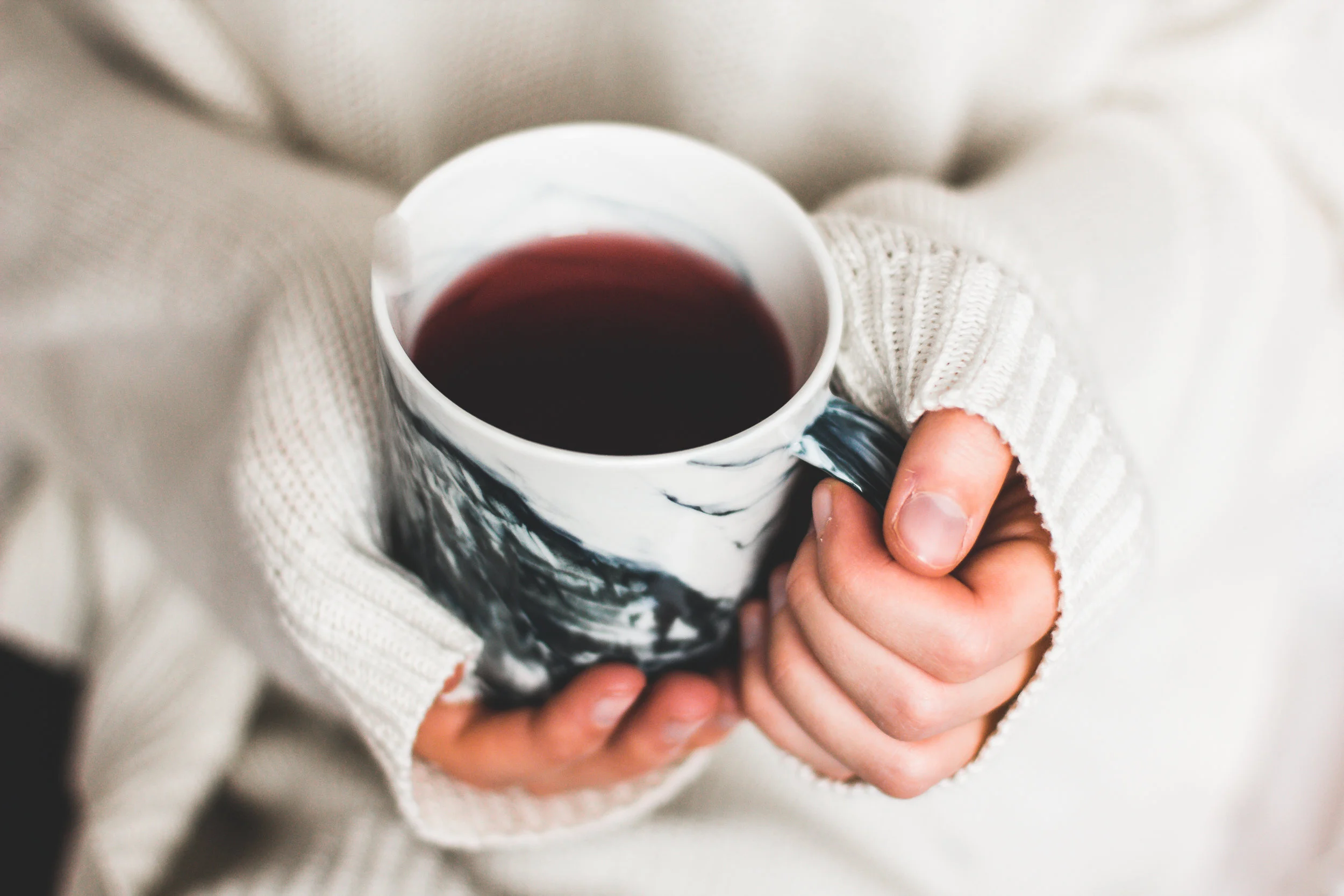
Other Kidney Nourishing Foods:
Black Foods: Blackberry, Black Beans, Black Tea
Micro-Algae: Spirulina, Seaweed, Nori, Chlorella
Greens: Escarole, Endive, Bock Choy
Root Vegetables: Sweet Potato, Turnip, Beets
Whole Grains: Oats, Barley, Amaranth
Nuts: Water Chestnut, Walnut
Broths: Bone Broth or Veggie-based

ASSESS THE ROLE “FEAR” PLAYS IN YOUR LIFE
In TCM, emotions are a known cause for illness, and each one affects our organs in specific ways.
Fear is the emotion that governs the Kidneys. Unlike its bad rep, fear is actually a normal and healthy emotion—its purpose is to protect us. It is when we try to ignore our fears that they tend to grow, become chronic, or even irrational which keeps us from having the willpower to make basic decisions and live our life. It’s no surprise the Kidneys govern fear: in Western Medicine, the Kidneys house our adrenal glands, which produce cortisol and norepinephrine when we are faced with threatening situations, stress, and major life changes. Those cliche expressions hold some truth: getting “cold feet,” meaning you could not make a move due to fear—that describes a weakness in the Kidneys! That concept of getting “stage fright” with involuntary urination? Fright weakens the Kidneys to the point it cannot withhold qi and body fluids. You see? It’s all connected.
Not all fears can be rationalized though, and I encourage my patients struggling with deep-seeded ones to work with a therapist in addition to Acupuncture.
If you know that fear holds too much power in your life, try sitting with it. Allowing yourself to feel your fear gives it less power over you—as uncomfortable as it might be to let your mind wander there, it can feel liberating. When each fear crops up, sort through it: see what your fear is trying to protect you from vs. what is worth stepping outside your comfort zone for.
ACUPRESSURE
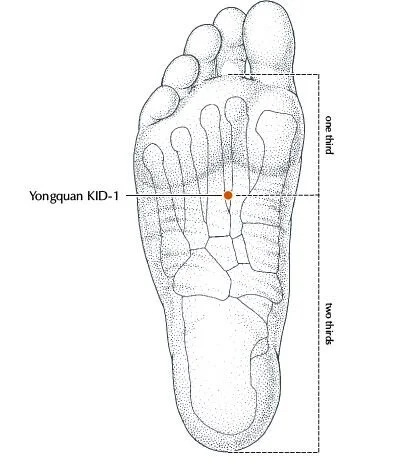
The Kidney Channel starts at the base of the foot, in a point called Yongquan—Gushing Spring. This is a great point for strengthening the Kidneys (Adrenals too) plus as the lowest point on the body, it has a powerful descending and grounding effect.
Use It For:
Anxiety, Insomnia, Vertex Headaches, Hypertension, Nausea, Hot Flashes, Poor Memory, and disorders of the throat/tongue (inability to swallow, loss of voice)
To Find It:
Feel for a tender depression on the bottom of your foot, between your second and third toe. This point is at the base of the ball of your foot, just before the arch.
To Activate:
Press this point for 30-60 seconds as needed during the day, such as if you experience a drop in energy during the early evening hours (like 5-7pm—the Kidney‘s time), or if you feel like you can’t ‘get out of your own head,’ this is a good point to help you feel settled. Press to your comfort level, but it should feel a little tender.
Well, there you have it!
I know it’s a lot to reflect on, but that’s what this season is for after all.
I wish you a Winter filled with realizations, still moments, good health, and the conviction to follow your path.
. . .
Disclaimer: Information contained in this article is not meant to diagnose or treat any medical symptoms/condition. If you have any health concerns or an emergency, seek out medical attention. If you are a patient of ours with a health concern, contact us so we can help and make appropriate referrals as needed. If you have questions, feel free to reach out via email at empowerchiroacu@gmail.com. Thanks for reading!